
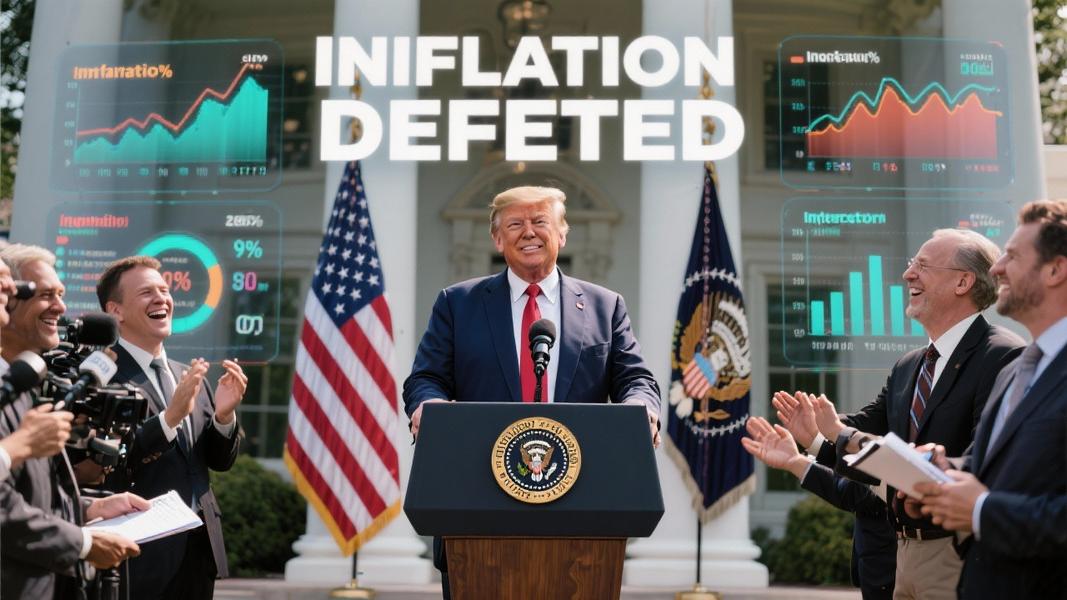
Wholesale prices unexpectedly fell last month, surprising economists and delivering a significant blow to predictions that the Trump administration’s tariffs would drive inflation higher.
The Producer Price Index (PPI) for August 2025 came in at just 2.6% year-over-year, substantially below the 3.3% economists had forecast. Even more striking, prices actually declined month-over-month, according to data released Wednesday.
The White House wasted no time claiming victory. “The latest PPI report shows there is no inflation — wholesale prices fell and smashed economists’ expectations,” said Press Secretary Karoline Leavitt in a statement. “President Trump has defeated Joe Biden’s inflation crisis while successfully implementing powerful tariffs, which haven’t hiked prices like the so-called ‘experts’ claimed.”
Surprising Economic Strength
The unexpected drop was driven by decreases across multiple sectors, including energy goods, trade services, and final demand services. This broad-based decline has economists rethinking their assumptions about tariffs’ inflationary impact.
“Boy, I’m surprised — real progress here. 2.6% on the year-over-year headline. We were expecting 3.3%!” exclaimed CNBC’s Rick Santelli in an on-air reaction captured on social media.
The favorable inflation news coincides with rising small business confidence. The Small Business Optimism Index reached its highest level since January, surpassing its historical average, according to data shared by market analysts.
What’s particularly notable is the absence of any tariff-related price pressures that many economists had warned about. The Trump administration implemented significant new tariffs on imports from several countries earlier this year, yet those haven’t translated into higher wholesale costs — at least not yet.
Economists Reassess Tariff Impact
Mohamed El-Erian, Chief Economic Advisor at Allianz, expressed surprise at how the tariffs have played out so far. “What we’re learning is that the final impact on the consumer is much less than people expected,” he noted in a television appearance.
El-Erian elaborated on who’s absorbing the tariff costs: “There’s the exporter, there’s the importer, and there’s the consumer — and so far, the consumer is carrying the least of the burden.” His analysis suggests that foreign manufacturers and domestic importers have largely chosen to compress their margins rather than pass costs to consumers.
Fox Business Network’s Cheryl Casone echoed this observation, remarking, “That tariff [price] impact… not seeing it — and here we go with a very positive and good inflation report coming out.”
The enthusiasm was shared across financial media. “This is fantastic news. Producer prices much lower than we thought,” said Adam Johnson from Bullseye Investment Group in comments reported online. “I thought we were going to see some of the tariff impact in this inflation data. We haven’t seen it. 2.6% was the PPI. We thought it was going to be 3.3%. This is just such wonderful news. I’m thrilled.”
Fed Under Pressure?
Does this data put pressure on the Federal Reserve to cut interest rates? Many market participants seem to think so.
Current market signals indicate an over 80% chance of an interest rate cut at the Fed’s September meeting, according to futures pricing.
El-Erian posed the question directly: “If the Fed is truly data dependent, the question should be, ‘Why not 50 [basis points]?'” suggesting the central bank should consider a larger-than-typical rate cut.
J.P. Morgan’s Chief U.S. economist Michael Feroli recently predicted the Fed would act soon: “For Fed chair Jerome Powell, the risk management considerations at the next meeting may go beyond balancing employment and inflation risks, and we now see the path of least resistance is to pull forward the next cut of 25 basis points to the September meeting.”
CNBC’s Becky Quick summed up the collective surprise at the data’s implications, saying, “That’s a real shocker, Steve, the idea that inflation is so much weaker than anticipated.”
Yet Federal Reserve Chair Jerome Powell has remained cautious. “We are well positioned to wait to learn more about the likely course of the economy before considering any adjustments to our policy stance,” Powell explained in recent comments, suggesting he’s not rushing toward rate cuts despite the positive inflation data.
Looking Ahead
Despite the encouraging PPI report, Powell’s stance remains measured. The Federal Reserve lowered rates by 1% in late 2024, but further cuts aren’t seen as urgent. Wall Street has scaled back its expectations, with some analysts now forecasting just one cut in 2025 — if any.
That said, if these inflation trends continue, the pressure on the Fed to move will only grow. The September Fed meeting now looms as a potential inflection point for monetary policy, with implications for everything from mortgage rates to stock valuations.
For now, it appears the dreaded “tariff-flation” hasn’t materialized. Whether that remains true as the full effects of trade policies work through the economy is the $24 trillion question facing the U.S. economy.
