
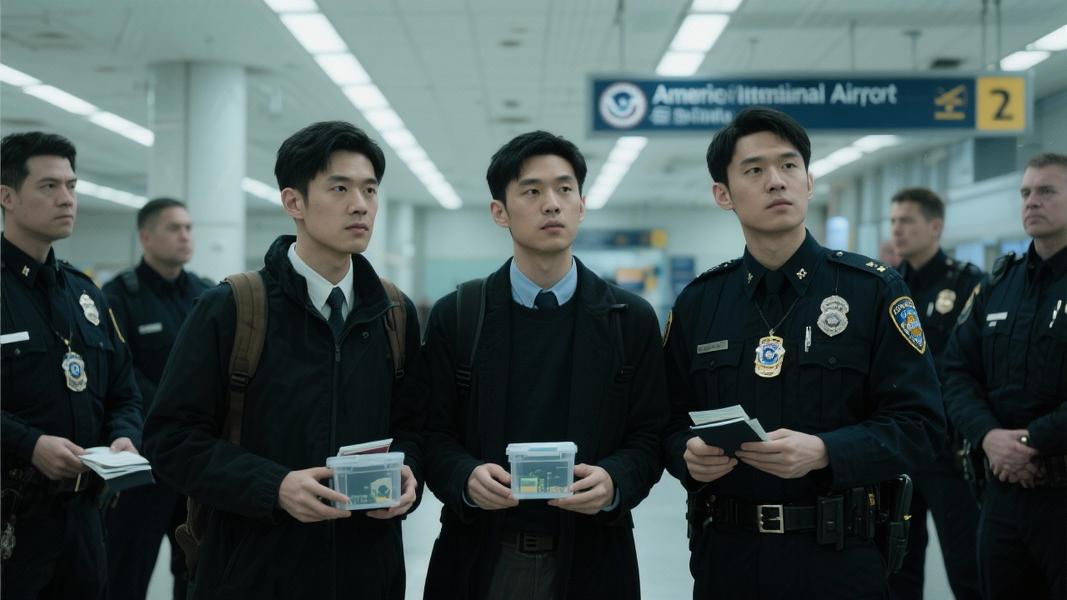
Chinese researchers at the University of Michigan have been charged with smuggling biological materials and making false statements to U.S. authorities, in a case that federal officials warn has serious national security implications. The investigation began with the arrest of Chengxuan Han, a Ph.D. student from Wuhan, and has now expanded to include three additional Chinese scholars.
Federal prosecutors announced that Han was caught sending packages containing round worm-related biological materials to the University of Michigan and subsequently lying about these shipments during a border inspection. According to court documents, “Han admitted to sending the packages, admitted that the packages contained biological material related to round worms, and admitted to making false statements to the CBP officers during her inspection.”
Pattern of Deception Emerges
The investigation has since widened. Three more Chinese scholars — Xu Bai, Fengfan Zhang, and Zhiyong Zhang — have been charged with conspiracy to smuggle biological materials and making false statements. All were connected to the University of Michigan’s Shawn Xu laboratory.
“Allegedly attempting to smuggle biological materials under the guise of ‘research’ is a serious crime that threatens America’s national and agricultural security,” said Attorney General Pamela Bondi in a strongly worded statement.
What happened after Han’s initial arrest? The three additional scholars, who had received shipments from Han containing concealed biological materials, refused to cooperate with the university’s internal investigation. This defiance led to their termination and made them “eligible for removal by the Department of Homeland Security,” according to reports.
Attempted Flight and Interception
But the story doesn’t end there. In what appears to be a coordinated attempt to evade authorities, the defendants changed their flight plans and tried to board a flight from JFK to China. Customs and Border Protection officers intercepted them before they could leave the country.
During the inspection, Zhiyong Zhang made false statements about Han, while Bai and Fengfan Zhang admitted they had “received packages from Han including after her arrest or removal from the United States” — a revelation that further complicated their legal situation.
National Security Implications
Federal officials aren’t mincing words about the seriousness of these cases. “This case underscores the vital importance of safeguarding the American people and addressing vulnerabilities within foreign student and exchange visitor programs,” said acting ICE Director Todd M. Lyons.
The charges come amid growing concerns about academic espionage and the potential exploitation of research institutions. FBI Director Kash Patel emphasized that “these charges show the FBI and our partners will aggressively investigate and hold accountable those who violate our laws, and that academic research cannot excuse illegal activity.”
Law enforcement agencies, including Immigration and Customs Enforcement Homeland Security Investigations, the Federal Bureau of Investigation, and Customs and Border Protection, have highlighted their collaborative efforts in this case. CBP Director of Field Operations Marty C. Raybon noted that “this case exemplifies the critical role of collaboration among our federal partners in defending our national security interests.”
The incident has prompted calls for increased vigilance and improved admissions procedures at educational institutions across the country. As investigations continue, the case raises troubling questions about the intersection of academic freedom, international collaboration, and the protection of sensitive biological materials in an increasingly complex geopolitical landscape.
