
Trump’s former Uber executive takes helm of Pentagon’s tech innovation efforts, narrows focus to six critical areas
Defense Innovation Gets a Silicon Valley Makeover
Emil Michael, the Egyptian-born businessman and former Uber executive, has wasted no time putting his stamp on the Pentagon’s innovation strategy after being sworn in as Under Secretary of Defense for Research and Engineering on May 20, 2025.
Just weeks into his tenure, Michael has dramatically streamlined the Department’s research and development focus, slashing the previous fourteen Critical Technology Areas to just six — a move designed to accelerate innovation and sharpen America’s military edge in an increasingly competitive global landscape.
“The previous list of fourteen CTAs did not provide the focus that the threat environment of today requires,” Michael stated in announcing the overhaul. The tech executive, who previously served as Uber’s chief business officer, brings both Silicon Valley experience and defense credentials to the role, having served as a White House Fellow and Special Assistant to Defense Secretary Robert Gates from 2009-2011, according to his biography.
Michael’s nomination was among President Trump’s first official acts upon returning to office. Sent to the Senate on Inauguration Day, the nomination moved through hearings in late March before securing confirmation by a vote of 54-43 on May 14.
Six Areas of Focus
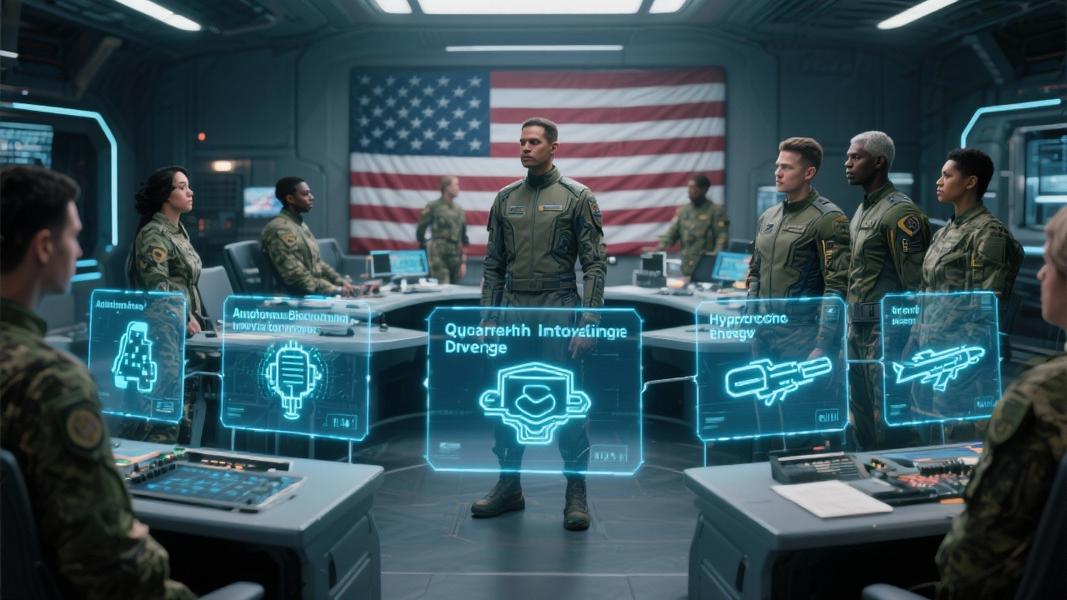
What exactly are these six critical technologies that will define America’s military future? The Department has identified them as Applied Artificial Intelligence (AAI), Biomanufacturing (BIO), Contested Logistics Technologies (LOG), Quantum and Battlefield Information Dominance (Q-BID), Scaled Directed Energy (SCADE), and Scaled Hypersonics (SHY).
The shift represents more than just bureaucratic reshuffling. It signals a fundamental change in how the Pentagon approaches technological development and procurement — one that Michael suggests will be more nimble, competitive, and open to innovation from smaller players.
“The DOD needs to foster a more robust and competitive defense industrial base by providing more realistic requirements, inviting smaller and innovative companies with less burdensome processes, and becoming more agile in how and when we grant contracts,” Michael explained upon taking office. “The private sector too should bear some more responsibility for the risks of their own failure.”
But can simply narrowing focus areas actually transform the notoriously slow-moving defense acquisition system? That’s the bet Michael is making — that concentration of effort will translate to faster results.
Industry Implications
Secretary of War Pete Hegseth has thrown his full support behind the initiative, declaring that “Under Secretary Emil Michael’s six Critical Technology Areas will ensure that our warriors never enter a fair fight and have the best systems in their hands for maximum lethality.”
For defense contractors, the narrowed focus creates both winners and losers. Companies aligned with the six priority areas stand to benefit from concentrated funding streams, while those working in areas no longer designated as critical may face tougher competition for diminishing resources.
Michael’s background suggests he’ll push for more Silicon Valley-style disruption within the traditional defense industrial base. At Uber, he developed a reputation for aggressive business tactics and rapid scaling — approaches that could shake up established procurement patterns if applied to defense technology development.
“A healthy ecosystem will provide for weapons that are better, cheaper and faster,” Michael noted in his initial statement as Under Secretary — a line that reads like it could have come from a startup pitch deck rather than Pentagon leadership.
The success of this approach will likely depend on whether Michael can navigate the complex web of congressional oversight, military requirements processes, and entrenched contractor relationships that have historically slowed Pentagon innovation. If he succeeds, America’s warfighters may indeed never have to enter what Secretary Hegseth calls “a fair fight.” If he fails, critics will surely point to his business background as evidence that Silicon Valley solutions don’t always translate to national security challenges.
