
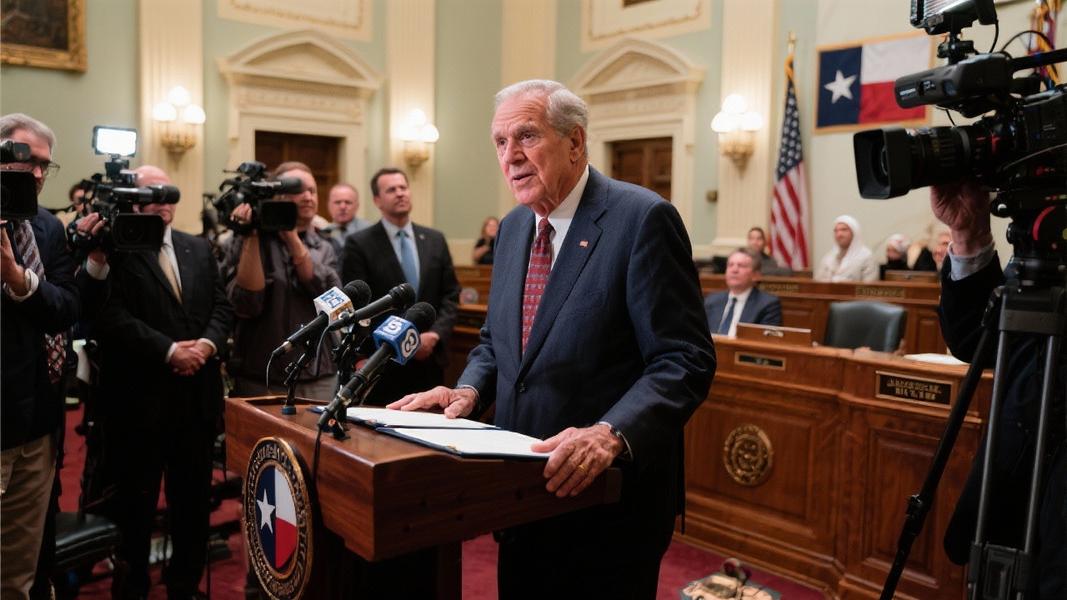
Texas Governor Greg Abbott has taken the extraordinary step of designating the Council on American-Islamic Relations (CAIR) and the Muslim Brotherhood as “foreign terrorist organizations,” effectively banning them from purchasing land within state borders. The controversial proclamation marks one of the most aggressive actions against Muslim advocacy groups by a U.S. elected official in recent years.
In his Tuesday announcement, Abbott declared both organizations as terrorist groups and additionally labeled CAIR a “transnational criminal organization.” The governor’s move relies on a recently enacted Texas law prohibiting “foreign adversaries” from acquiring property in the state.
“The Muslim Brotherhood and CAIR have long made their goals clear to forcibly impose Sharia law and establish Islam’s mastership of the world,” Abbott stated in part of his proclamation, which specifically targets the organizations’ ability to purchase or acquire land in Texas.
Legal Questions and Immediate Backlash
The governor’s unprecedented action immediately raised questions about its legal standing and constitutionality. Can a state governor unilaterally designate domestic organizations as foreign terrorist groups? That power typically resides with federal authorities.
CAIR, the nation’s largest Muslim civil rights organization, wasted no time responding to Abbott’s claims. The group characterized the governor’s proclamation as a “publicity stunt” with “no basis in fact or law,” accusing him of “defaming a prominent American Muslim institution with debunked conspiracy theories and made up quotes.”
In their forceful rebuttal, CAIR representatives added that “Mr. Abbott has once again shown his top priority is advancing anti-Muslim bigotry, not serving the people of Texas.” The organization, founded in 1994, has long maintained that it is an independent American civil rights group with no ties to terrorism.
Abbott’s proclamation appears to be the latest in a series of bold political moves from the Texas governor, who has previously made headlines with controversial policies on immigration, abortion, and LGBTQ+ rights. Critics suggest this latest action may be designed to appeal to his conservative base.
Broader Implications
The designation comes at a particularly sensitive time for Muslim Americans, many of whom have reported increased discrimination and hostility amid tensions surrounding the Israel-Hamas conflict. Civil liberties experts suggest Abbott’s proclamation could further marginalize Muslim communities in Texas.
Legal challenges to the proclamation seem inevitable. The American Civil Liberties Union has previously challenged similar attempts to restrict organizations based on religious or political affiliations, often citing First Amendment protections.
The Muslim Brotherhood, founded in Egypt in 1928, has complex and varied manifestations across different countries. While some nations have designated branches of the organization as terrorist groups, the United States government has not taken this step at the federal level.
As this story develops, the distinction between state and federal authority in designating terrorist organizations will likely become a central legal question. For now, Muslim advocacy groups and civil liberties organizations across the country are watching Texas closely, concerned that similar measures could spread to other states with Republican leadership.
