
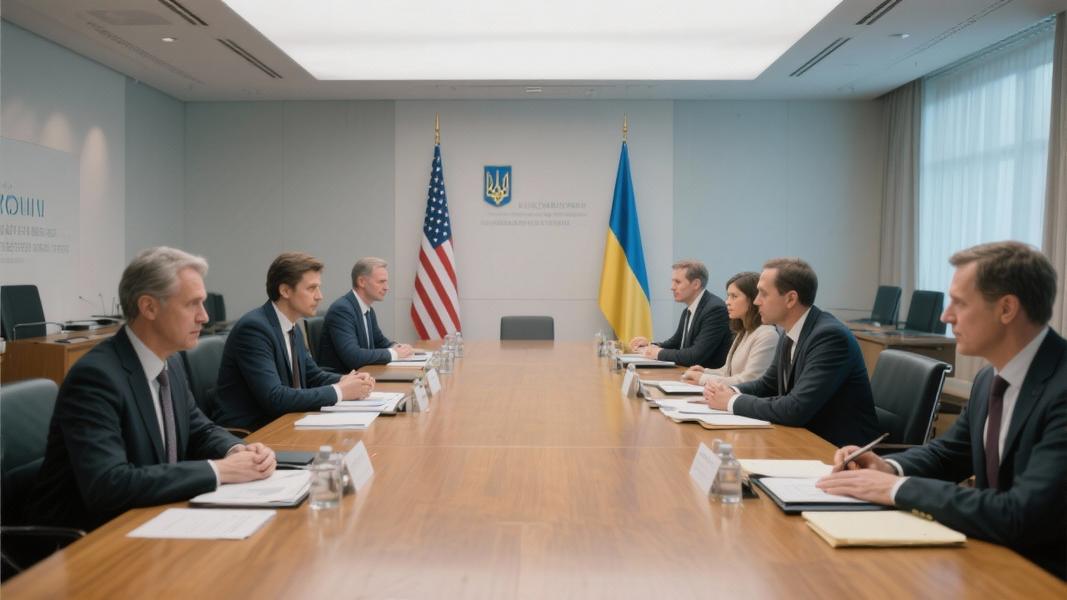
In Geneva, senior Ukrainian and U.S. officials hailed “good progress” after a day of intensive talks aimed at advancing a controversial U.S. peace proposal for ending the war in Ukraine. The November 23 meeting, led by U.S. Secretary of State Marco Rubio and Ukrainian presidential administration head Andriy Yermak, marked what participants called “probably the most productive and meaningful” discussions in the peace process to date.
The closed-door negotiations centered on a 28-point peace plan proposed by the Trump administration, which has reportedly set a November 27 deadline for Ukraine to approve the framework. “We are moving forward to the just and lasting peace Ukrainian people deserve,” Yermak told reporters after the session.
Contentious Concessions
Behind the diplomatic optimism lies a complicated reality. The U.S. peace proposal requires Ukraine to make significant concessions — including ceding territory, limiting its military capabilities, and renouncing NATO membership ambitions. These terms have sparked concern in Kyiv and among European allies.
“Ukraine must be able to defend itself,” said Alice Rufo, France’s minister delegate at the Defense Ministry, describing the plan’s military restrictions as “a limitation on its sovereignty.” European officials met separately with the Ukrainian delegation before the U.S. talks, pushing Kyiv to seek revisions to aspects they view as overly favorable to Moscow.
Still, the Ukrainian delegation maintained a constructive tone. “We are in a very constructive mood,” Yermak stated before meeting with American counterparts. “We continue working together to achieve a lasting and just peace for Ukraine.”
U.S. Diplomatic Push
The American delegation, featuring Secretary Rubio, Army Secretary Daniel Driscoll, and Trump’s special envoy Steve Witkoff, emphasized their commitment to securing favorable terms for Ukraine. “Our intention is to secure the strongest possible outcome for the Ukrainians,” a U.S. official told Swiss news agency Keystone-ATS.
What makes this proposal different from previous attempts? The peace plan was authored by the U.S. with some Russian input and is being offered as a “strong framework for ongoing negotiations,” according to a statement from Rubio shared on social media.
Ukrainian officials expressed appreciation for the American engagement. “We appreciate our American partners working closely with us to understand our concerns to reach this critical point and we expect to make more progress today,” said Rustem Umerov, a member of Ukraine’s Geneva delegation.
Trump’s Deadline Diplomacy
President Donald Trump has publicly stated that ending the Ukraine conflict is a priority for his administration. “I would like to get to peace. It should have happened a long time ago. The Ukraine war with Russia should have never happened,” Trump remarked recently.
Despite setting a tight deadline for Ukrainian approval, Trump has indicated that the current proposal isn’t necessarily final. U.S. officials in Geneva emphasized their desire to “iron out the final details…to draft a deal that is advantageous to them (Ukraine).”
The high-stakes negotiations continue as Ukraine balances pressure from Washington with concerns from European capitals. With the November 27 deadline looming, Yermak and his team face the delicate task of securing terms that protect Ukraine’s core interests while keeping crucial U.S. support intact — all while the war continues to exact its toll on the ground.
