
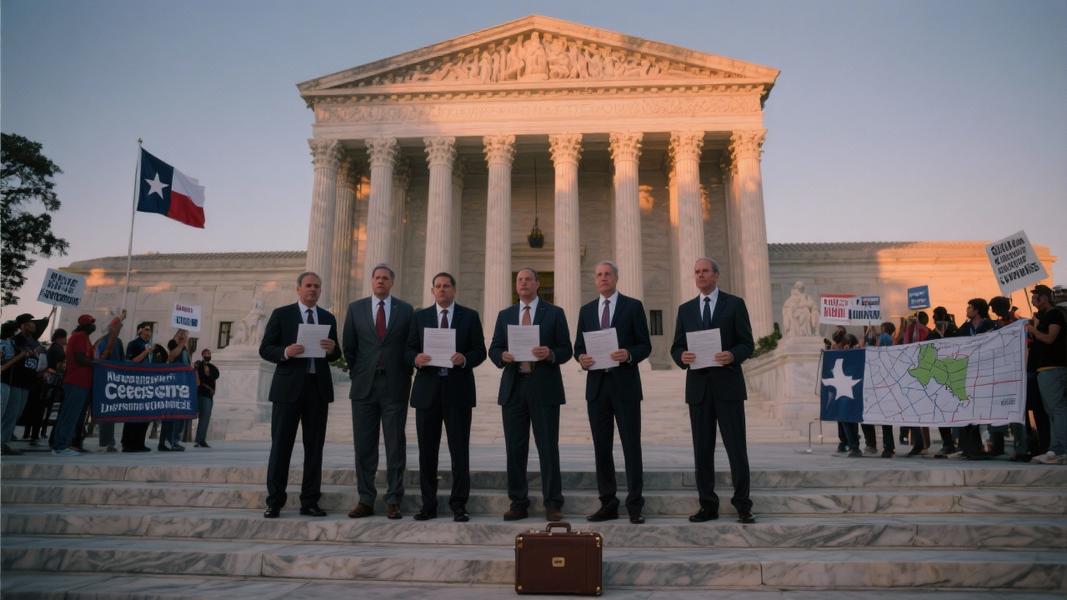
Texas Attorney General Ken Paxton has launched a vigorous defense of the state’s congressional maps at the U.S. Supreme Court, calling the recent district court injunction that blocked their implementation part of a “radical Left” attempt to “steal the U.S. House.”
The legal battle intensified when Justice Samuel Alito issued an administrative stay that temporarily blocks the lower court’s injunction, effectively keeping Texas’s redistricting plan alive while the high court considers the case. The dispute centers on redrawn congressional boundaries that critics argue unfairly advantage Republican candidates.
“The radical Left is attempting to abuse the judicial system to steal the U.S. House, but we will be relentless in defending our state’s right to draw our own maps and chart our own political destiny,” Paxton declared in a statement accompanying his Supreme Court filing. “The map I’m defending is exactly what Texas needs to ensure better representation of our conservative values and the political ideology of our state’s voters.”
Partisan Intentions Cited in Court Ruling
At the heart of the controversy is U.S. District Judge Jeffrey Brown’s ruling, which pointed to comments from Governor Greg Abbott and Republican legislators as evidence of partisan motivations behind the redistricting effort. The judge specifically referenced both public statements and private communications that suggested political calculations were driving the new boundaries.
One particular communication appears to have damaged the state’s case. “If there’s one thing everyone involved can agree on, it’s that the letter was a mistake,” Judge Brown wrote in his opinion, referencing correspondence that allegedly revealed partisan intent.
The state’s legal team has consistently maintained that the Legislature was within its rights to redraw district lines. Paxton’s office has continued pressing this argument in its response to what it characterizes as “liberal plaintiffs’ filings” before the Supreme Court, according to a statement from the Attorney General’s office.
Governor Joins the Fray
What’s at stake? Control of congressional seats that could help determine the balance of power in Washington.
Governor Greg Abbott quickly announced the state would appeal the district court’s decision to the Supreme Court. “The Legislature redrew our congressional maps to better reflect Texans’ interests,” Abbott asserted, echoing the state’s position that the redistricting process was legitimate.
The legal battle highlights the increasingly contentious nature of redistricting fights nationwide, where accusations of gerrymandering — the practice of manipulating electoral boundaries to favor one political party — have become commonplace. Texas, with its 38 congressional seats, represents a particularly significant prize in these disputes.
For now, the Supreme Court’s administrative stay keeps the contested maps in place, but the justices haven’t yet decided whether to take up the full case. That decision could have far-reaching implications not just for Texas, but for how states across the country approach the politically charged process of redrawing electoral boundaries after each census.
