
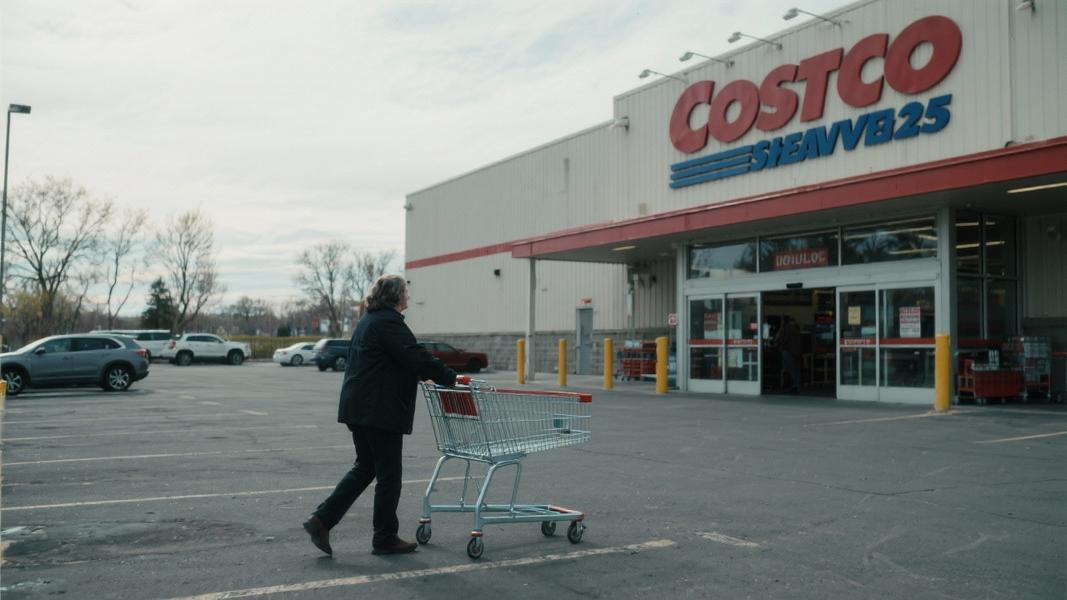
Retail giant Costco has joined the growing ranks of companies demanding refunds for tariffs imposed during the Trump administration, marking the largest corporation yet to take such legal action. The membership-based warehouse chain filed its complaint last week in a specialized trade court, setting the stage for what could become one of the most significant tariff disputes in recent history.
The high-stakes legal battle hinges on whether former President Donald Trump had the authority to impose sweeping tariffs using national emergency powers. Two federal courts have already ruled that he did not, and now the Supreme Court is weighing in, with several justices expressing skepticism about such broad presidential authority during recent hearings.
“They’re going to court to demand refunds on the tariffs they’ve paid,” notes AP News in its coverage of Costco’s legal maneuver. The retailer’s decision comes after specialized courts, including the U.S. Court of International Trade and the U.S. Court of Appeals for the Federal Circuit, determined earlier this year that Trump’s extensive import taxes were imposed illegally.
Why file now?
Timing is everything in this case. Costco’s formal complaint demands immediate refunds to “ensure that its right to a complete refund is not jeopardized,” as the company stated in court documents. The urgency stems from approaching “liquidation” dates — the finalization of tariff bills — scheduled to begin December 15th, after which importers have only 180 days to contest charges.
“Their timeline might be whittled away depending on how long it takes to get a Supreme Court decision,” explained Joyce Adetutu, partner at Vinson & Elkins law firm. The retail giant isn’t alone in its preemptive legal action — companies like Revlon and Bumble Bee Foods have filed similar claims.
But what’s really at stake here? The Trump-era tariffs currently under dispute have generated approximately $90 billion in revenue. That’s money the government might have to return if the Supreme Court invalidates the tariffs.
“It’s uncertain whether refunds will be granted and, if so, how much, but the possibility has prompted many companies — including Costco — to file actions in the U.S. Court of International Trade to get in line, so to speak, for potential refunds,” said Brent Skorup, a legal fellow at the Cato Institute.
Legal battleground
The core legal question revolves around the International Emergency Economic Powers Act (IEEPA) and whether it gave Trump the authority he claimed. During recent Supreme Court hearings, justices appeared dubious about such broad interpretations. “Several of the high court’s justices expressed doubts that the president had sweeping power to declare national emergencies to slap tariffs on goods from almost every country on earth,” reported AP News.
Costco is essentially trying to “make sure that if and when the Supreme Court overturns the IEEPA tariffs, which could come as late as the summertime, they have the judgment in place and can collect a refund,” clarified Adetutu.
The former president has maintained that his tariff authority was virtually unlimited. Trump has also issued dire warnings about the potential economic consequences if his tariffs are invalidated, dramatically predicting it would trigger “1929 all over again, a GREAT DEPRESSION!” on his social media platform.
Unprecedented refund scenario
Should the Supreme Court strike down the tariffs, the logistics of processing potential refunds present their own challenges. While Customs and Border Protection routinely issues tariff refunds, they’ve never faced anything of this magnitude.
The agency “refunds tariffs every day, but not to this extent. This is a substantial amount of tariff income that has been collected. And really there hasn’t been a case where there’s been an influx of refund requests,” observed Adetutu.
How would this affect consumers? That remains unclear. While companies like Costco are fighting to recover the tariffs they’ve paid, there’s no guarantee those savings would be passed along to shoppers if refunds are granted.
For now, the retail giant and other importers can only wait as the judicial process unfolds, having staked their claims in what could become one of the most consequential trade disputes in decades — one that tests the boundaries of presidential power and could reshape how future administrations approach international trade policy.
