
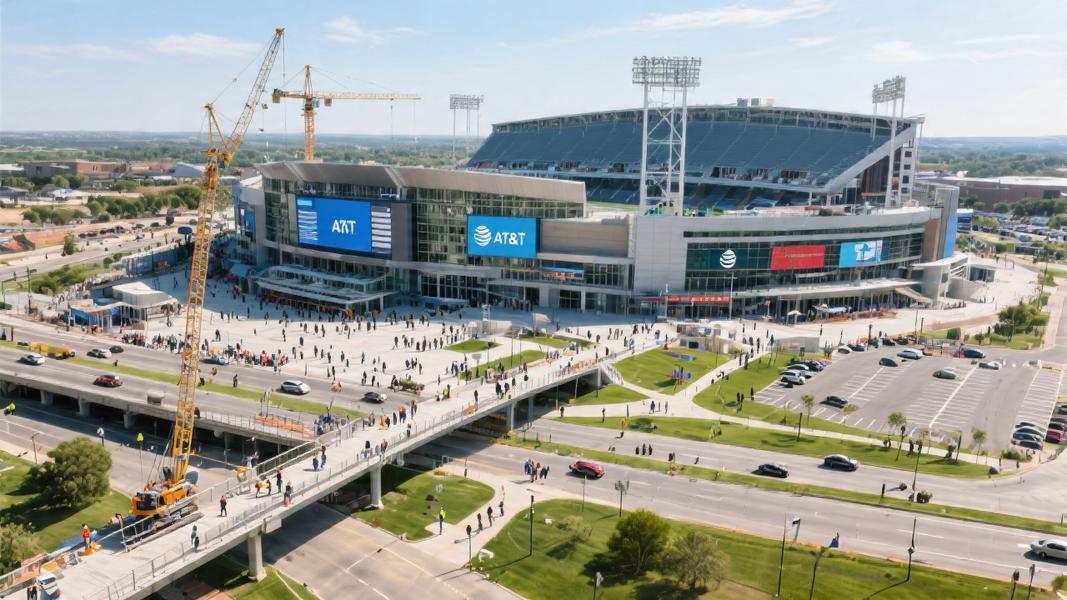
Arlington, Texas is staring down a billion-dollar question: how much is keeping the Dallas Cowboys worth — and who gets to decide?
The Arlington city council is weighing a proposal that would commit $273 million in public funds toward sweeping upgrades at AT&T Stadium, with the Dallas Cowboys pledging a far heftier $750 million of their own. The deal would lock the team into Arlington through 2055, extending a partnership that’s currently set to expire in 2039. That’s a sixteen-year extension — and a price tag that’s already stirring debate inside city hall and beyond.
What the Money Would Actually Buy
The planned improvements aren’t just cosmetic. The proposal outlines pedestrian bridges over surrounding roadways, a dedicated ride-share parking lot, expanded digital signage, upgraded plazas with shade structures, and a suite of security enhancements. It’s the kind of infrastructure overhaul that stadium operators argue is essential for keeping a venue competitive in an era of gleaming new football palaces popping up across the country.
The Cowboys’ $750 million share would cover improvements inside the stadium itself. Arlington’s $273 million would largely address the surrounding environment — the connective tissue between the building and the city that fans actually experience on game day.
A Legal Shortcut — and a Political Flashpoint
Here’s where it gets complicated. Under Texas law, the city council has the authority to approve a tax continuation to fund Arlington’s share of the deal — without putting it to a public vote. That’s not unusual. But it’s already drawing scrutiny from at least one member of the council itself.
Councilmember Bowie Hogg, who supports the deal in principle, isn’t entirely comfortable with how it might get done. “It’s a good thing for the city. It’s going to continue the partnership through 2055,” Hogg said, before adding a notable caveat: “I think the big question is how we say yes. I think the citizens should have a say in this.” That’s a fairly striking thing to hear from someone on the approving body — essentially acknowledging that the mechanism available to them might not be the right one to use.
Still, the council has shown it’s not afraid to act unilaterally when the budget demands it.
The Broader Budget Picture — and It Isn’t Pretty
The stadium deal doesn’t exist in a vacuum. Arlington’s finances have been under serious strain. The city faced a $20 million-plus budget shortfall heading into fiscal year 2026 — a gap that forced a painful round of spending cuts, new fees, fee adjustments, and ultimately, a property tax rate increase. The council reviewed the proposed $750.7 million FY2026 operating budget on August 5, 2025, and the picture it painted wasn’t comfortable reading.
By September, the council had voted 7-2 to approve a three-cent property tax rate increase, and 8-1 to adopt the full operating budget. Notably, Hogg — the same councilmember now urging public input on the stadium deal — was one of just two votes against the tax hike. Councilmember Andrew Piel joined him in opposition.
That context matters. Asking residents to absorb higher property taxes to close a budget hole — and then potentially committing $273 million in public money to a stadium deal, without a public vote — is the kind of sequence that tends to generate heat at town halls.
A City Balancing Competing Pressures
To be fair, the Cowboys are an enormous economic engine for Arlington. The team’s presence drives tourism, hotel tax revenue, and the kind of regional profile that smaller Texas cities can only dream about. Losing them — or even allowing the relationship to lapse — would carry real costs that don’t show up neatly on a balance sheet.
The city has been navigating other financial pressures as well. The proposed Massachusetts state budget for FY2027 — a separate Arlington entirely, up in New England — offered a glimpse of how municipalities across the country are wrestling with federal funding uncertainty. It’s a reminder that Arlington, Texas isn’t alone in trying to paper over fiscal cracks while keeping major stakeholders happy.
Back in Texas, the council has outlined its approach to closing the FY26 shortfall in detail — a patchwork of cuts and revenue adjustments that signals just how tight the margins are. Committing a quarter-billion dollars to stadium upgrades, even over time, is a significant overlay on top of that reality.
What Comes Next
The council hasn’t voted on the stadium proposal yet. But the outlines of the debate are already clear: supporters will argue the Cowboys are worth every penny, that the tax mechanism is legally sound, and that economic returns will justify the commitment. Critics — including some residents who just absorbed a property tax increase — will ask why they don’t get a seat at the table for a decision of this magnitude.
Hogg’s comment may end up being the most revealing thing said in this entire process. He’s essentially arguing that the city should do this deal — he just thinks the people paying for it deserve to weigh in first. In a city still piecing together its budget, that’s not an unreasonable position. Whether his colleagues agree is another matter entirely.
A billion-dollar handshake is one thing. Getting the whole city to shake on it is something else.
