
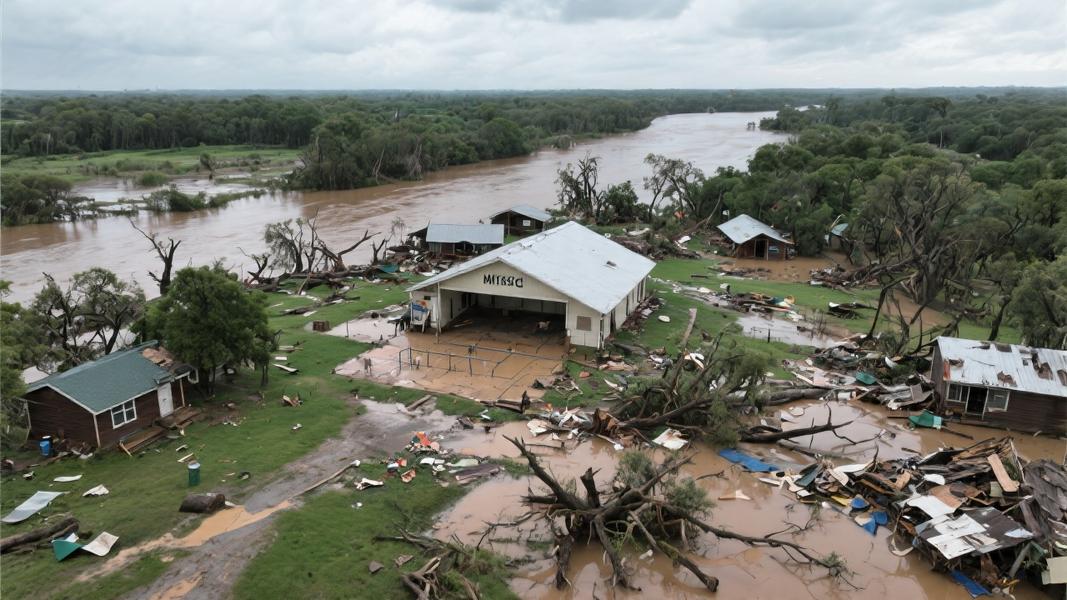
When the floodwaters rose at Camp Mystic this past July, the emergency plan on file told campers to do one thing: stay put. That single instruction, buried in a single page of guidance, may have cost lives.
The tragedy at Camp Mystic — the beloved Christian girls’ camp nestled along the Guadalupe River in Hunt, Texas — has since triggered a sweeping reckoning over how youth camps across the state prepare for natural disasters. At the center of it all is a document so thin it barely qualifies as a plan. Texas health officials have now cited the camp for deficiencies across 22 separate categories, giving administrators 45 days to overhaul what experts are calling a dangerously inadequate framework.
A One-Page Plan in a Flood-Prone Canyon
Here’s what the plan actually said. As detailed by investigators reviewing the document, the flood guidance read: “In case of flood, all campers on Senior Hill must stay in their cabins. Those on the flats must also stay in their cabins unless told otherwise by the office.” That’s it. No instructions to seek higher ground. No mapped evacuation routes. No clarity on which staff member was responsible for what — or when.
For a camp sitting on a river floodplain in the Texas Hill Country — a region notorious for its flash flood alley designation — that’s not a plan. It’s a liability.
As one broadcast investigation noted, the emergency plan “did not call for campers to seek higher ground in case of flood.” Experts reviewing the document were blunt in their assessments. Staying in a cabin on a floodplain during a rising river isn’t shelter. It’s a trap.
How Does Camp Mystic Compare?
Not every Texas camp operates this way. The contrast with other facilities is stark. Hermann Sons Life Camp, for instance, operates under a 30-page emergency action plan — a document that dwarfs Camp Mystic’s single-page guidance by any measure. Reporters found that tonight after the flood, as one anchor put it, “we now know more about the shortfalls with the emergency plan at Camp Mystic.” The variation between camps wasn’t just a matter of style. It reflected fundamentally different cultures of preparedness.
Still, Camp Mystic isn’t alone in having gaps. The broader issue, safety advocates say, is that Texas has historically allowed camps wide latitude in how they draft and maintain emergency procedures — leaving the depth and quality of those plans almost entirely up to individual operators.
The State Steps In
The Texas Department of State Health Services didn’t mince words. Its 11-page letter to Camp Mystic’s leadership catalogued deficiency after deficiency: no specific staff roles assigned during emergencies, no inclusive evacuation procedures, no evidence the plan had been tested or drilled in any meaningful way. The agency’s findings were part of new guidelines rolled out in the wake of the flood — a belated acknowledgment that the existing framework wasn’t working.
Camp Mystic’s leadership, for their part, responded with a statement that leaned heavily on the camp’s legacy. “Our priority remains the safety and well-being of our campers,” the statement read, “and we hope to continue the nearly century-long mission and ministry of Camp Mystic to provide a Christian camping experience for girls that allows them to grow physically, mentally and spiritually.” A noble sentiment. But it doesn’t answer how a camp with nearly a hundred years of history found itself operating on a flood plan that wouldn’t pass muster at a middle school.
What Experts Say Needs to Change
The deeper lesson here isn’t just about one camp. Emergency management specialists have long argued that written plans mean almost nothing if they aren’t practiced. An Emergency Action Plan that staff and campers have never walked through — never drilled, never internalized — is essentially decorative. When a flood hits at 2 a.m. and the river is rising fast, no one has time to read a document. Response has to be automatic.
That’s the core argument made by flood safety advocates who examined the Camp Mystic tragedy and identified what they called “the camp gap” — the dangerous disconnect between having a plan on paper and having a culture that actually executes it under pressure. Drills. Role assignments. Practiced decision trees. These aren’t bureaucratic luxuries. They’re the difference between an orderly evacuation and chaos.
That said, change is slow. Regulators are moving, but the 45-day window given to Camp Mystic is just a start. Advocates are pushing for statewide standards that would require all licensed youth camps to submit, test, and regularly update emergency plans that meet a consistent baseline — not a floor so low that a single page could once clear it.
For the families who sent their daughters to Camp Mystic this summer, no policy revision will feel like enough. But for the campers who come next — at Mystic and at every other facility perched near a Texas river — the question of what’s written in that emergency binder, and whether anyone’s ever actually practiced it, has never mattered more.
