
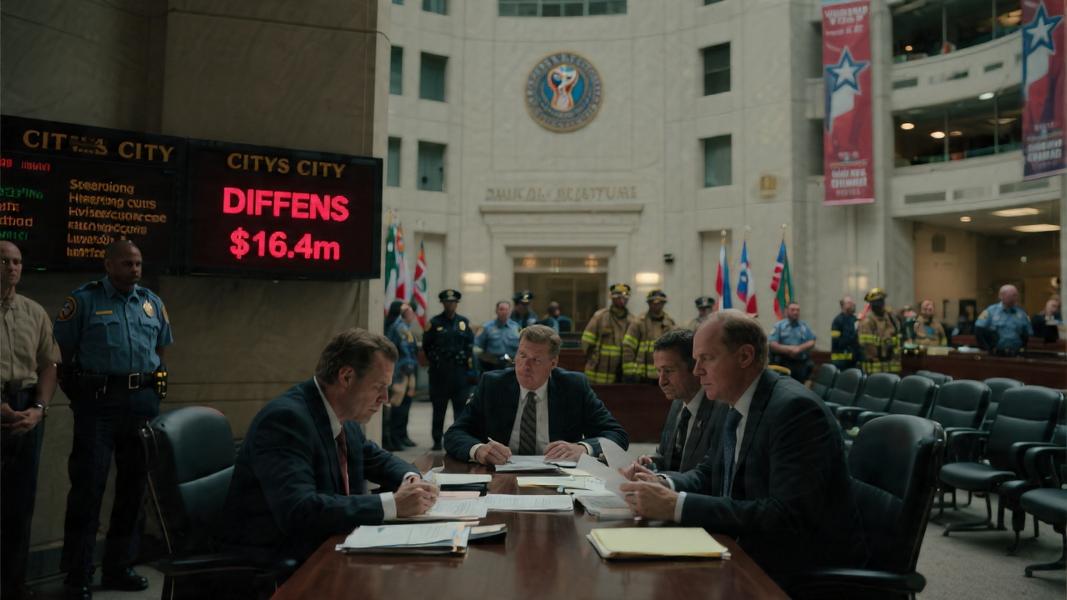
Dallas is bleeding money — and the city doesn’t have a tourniquet big enough. Two separate budget crises are now squeezing the city and its school district simultaneously, raising hard questions about what services residents can actually count on in the months ahead.
The City of Dallas is staring down a $16.4 million shortfall in its General Fund for the 2025-26 fiscal year, a gap driven by a punishing combination of police and fire overtime costs, softening sales tax revenues, and a $13.8 million overrun in the Employee Health Benefit Fund — the result of a surge in medical claims that caught city budget planners off guard. It’s the kind of fiscal pressure that doesn’t show up all at once. It compounds, quietly, until it doesn’t.
The City’s Response: Freeze, Cut, Wait
City officials haven’t been sitting still. Dallas has already enacted a broad hiring freeze — with a carve-out for police and fire personnel — alongside new overtime restrictions and reductions in non-critical spending and travel. The message from leadership has been blunt: tighten up or face something worse.
“These measures are necessary to maintain essential services and uphold our fiscal responsibility to Dallas residents,” city officials said in a statement, striking a tone that was equal parts reassurance and warning. Whether residents feel reassured is another matter entirely.
Still, the math is stubborn. Overtime in public safety departments has long been a structural problem for large American cities, not just a line item someone forgot to watch. When you couple that with declining sales tax collections — a signal that consumer spending in the region may be cooling — the shortfall starts to look less like an accounting error and more like a systemic reckoning.
Meanwhile, Across Town at the School District
How bad is it beyond City Hall? Bad enough that Dallas ISD is fighting its own separate battle at exactly the same moment. The school district is grappling with a $22 million budget shortfall tied to a federal funding freeze — a blow that’s already prompted a hiring freeze for nonessential central office employees and put programs like after-school care on the chopping block, according to reporting on the district’s situation.
That’s the catch. The families most likely to depend on city services are often the same ones who depend on school district programs. After-school care isn’t an amenity for most working parents — it’s infrastructure. Cutting it doesn’t just inconvenience people; it ripples outward in ways that are hard to quantify and easy to underestimate.
The federal funding freeze adds a layer of uncertainty that local budget writers simply can’t plan around. You can model for a slow sales tax quarter. You can’t easily model for Washington pulling the rug out mid-fiscal year.
A City Watching Its Margins Shrink
Taken together, these twin shortfalls paint a portrait of a major American city under real financial strain — not catastrophic, not yet, but uncomfortable enough that the decisions being made right now will carry consequences well into next year. Dallas is one of the fastest-growing metros in the country, which makes the timing feel particularly ironic. Growth, it turns out, doesn’t automatically fix your budget. Sometimes it just makes the gaps harder to see until they’re harder to close.
For now, city workers are being asked to do more with less, school district families are being told to brace for cuts, and officials on both sides are hoping the numbers stop moving in the wrong direction. It’s a lot to hope for.
The real question isn’t whether Dallas can close a $16 million gap or a $22 million gap. It’s whether the city can do it without the people who need it most feeling it the sharpest.
