
Dallas Area Rapid Transit is spending big — and restructuring even bigger. The regional transit authority is pushing through a wave of changes that will reshape how North Texans ride the bus for years to come.
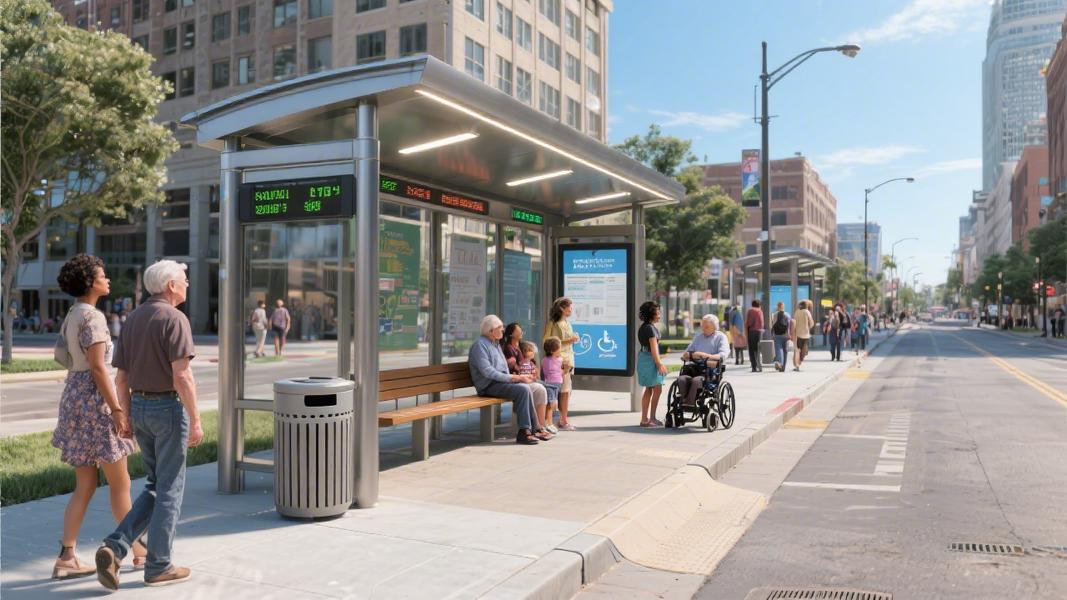
At the center of it all is a $71.5 million contract that DART’s board recently approved with Tolar Manufacturing Company, authorizing a sweeping overhaul of bus stops across the region. The deal covers 1,350 shelters equipped with benches, real-time arrival displays, and updated technology, along with 1,500 steel benches, 3,000 trash cans, and 500 new lights. It’s the kind of infrastructure investment that doesn’t generate many headlines — but for the commuter standing in the August heat waiting on a Route 40, it means everything.
Modernizing the Rider Experience
“Investing in modern bus stop amenities is about improving the daily experience for our riders,” outgoing DART CEO Nadine Lee said, framing the upgrade as a matter of basic dignity as much as infrastructure. Lee, who is departing the agency, leaves behind a contract that could define the physical face of DART for the next five years.
The agency’s own announcement described the move as an effort to add and replace bus stop amenities across North Texas — a region where car culture runs deep and transit ridership has long struggled to compete. Getting people to choose the bus, advocates have argued for years, starts with making the bus stop itself feel like a place worth standing.
Federal Dollars and New Infrastructure
That’s not the only money flowing in. DART recently secured a $20 million federal grant to build a new bus housing facility, with updated route plans slated to begin in June 2026. The grant is a meaningful win at a time when federal transit funding is anything but guaranteed, and it signals that Washington still sees DART as a system worth backing.
The economic case for transit investment, meanwhile, is getting harder to dismiss. Construction activity around DART stations between 2022 and 2024 generated $51.5 million in state and local tax revenue — breaking down to $25.4 million from sales tax, $21.1 million in property taxes, and another $5 million from fees and other sources, according to the agency. Four of those development projects were recently named finalists in the D CEO Commercial Real Estate Awards — a rare piece of good press for a transit agency that’s spent recent years navigating some very public friction with its member cities.
A Funding Fight, and a Fragile Peace
That friction hasn’t fully disappeared. Several cities within DART’s service area have threatened to leave the system over what they see as an imbalance between the sales-tax revenue they contribute and the services they receive in return. It’s a tension that’s been building for years, and it finally pushed the board toward action.
DART’s board approved a six-year funding plan designed to address those complaints directly. Under the deal, a growing share of sales-tax revenue will be returned to cities — starting at 5% and rising to 7.5% — supplemented by Regional Transportation Council funding. The net effect, the agency projects, is that cities will receive roughly 10% more funding by 2031. Whether that’s enough to keep everyone at the table remains an open question.
A Leaner Bus Network on the Horizon
Here’s the trade-off nobody’s talking loudly about. To help limit property tax growth — and keep restless member cities from bolting — DART also greenlit a redesigned bus network set to launch in Summer 2026 that actually reduces service by 10%. The new system is built around the nearly 60% of riders among the agency’s 3.75 million annual bus users who depend on the network for work commutes — prioritizing frequency and reliability on high-demand corridors over broader coverage.
Still, cutting service while simultaneously spending $71.5 million on nicer bus stops is the kind of contradiction that tends to follow transit agencies around. Riders who lose access to a route won’t be soothed by a new shelter. That tension — between fiscal constraint and genuine equity — is one DART will have to answer for as 2026 approaches.
For now, the agency is betting that a better-looking, better-funded, and better-organized system can win back public confidence. The investments are real. The ambition is real. Whether the execution matches either is the story still being written.
