
A Fort Worth firefighter crushed and burned by a collapsing garage. More than thirty of his colleagues stepping forward with nearly identical horror stories. And a city government that, until recently, seemed content to let the system grind on without scrutiny. Now, something is finally moving.
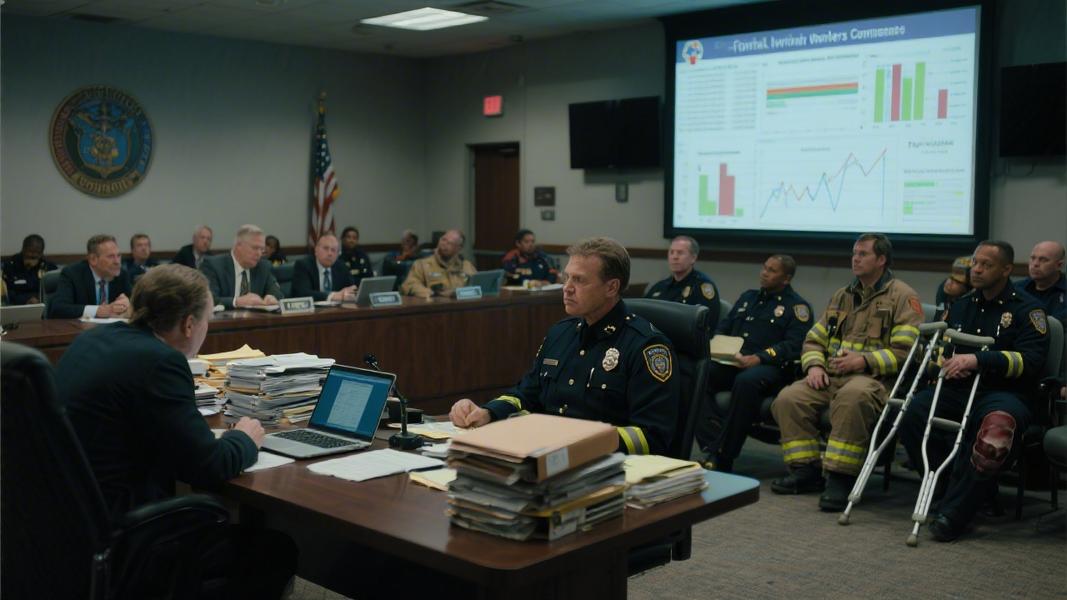
Following an I-Team investigation that exposed a troubling pattern of denied and delayed workers’ compensation claims among Fort Worth’s first responders, the city council convened this week to confront a problem that advocates say has been festering for years. The case that cracked it open belongs to Caleb Halvorson, a firefighter who was seriously hurt battling a two-alarm house fire when a garage collapsed directly on top of him. The injuries — burns and crush trauma — were severe. What followed, according to Halvorson, was described as nothing short of “horrible, agonizing” — not just the physical recovery, but the bureaucratic ordeal of fighting for basic care that workers’ compensation is supposed to guarantee.
Thirty Voices and Counting
How bad is it? Bad enough that once Halvorson’s story went public, the floodgates opened almost immediately. Councilmember Charlie Lauersdorf told colleagues at the council meeting that he’d been inundated. Stated bluntly at the dais: “There’s been more and more and more stories. Thirty plus first responders have come directly to me.” Firefighters. Police officers. Emergency personnel who run toward the kinds of situations most people flee — and then spend months, sometimes longer, wrestling with insurance bureaucracies when their bodies pay the price.
Workers’ compensation, in theory, isn’t complicated. As city officials acknowledged during the meeting, it exists to ensure that employees “injured or become ill as a result of their work” receive timely treatment and, where appropriate, financial compensation. That’s the promise. The reality, for a growing number of Fort Worth’s first responders, has looked quite different.
Who’s Actually Running the System
It’s worth understanding the machinery here. In Fort Worth and across much of North Texas, workers’ comp claims aren’t managed directly by the cities themselves — they’re routed through insurance carriers or third-party administrators. Fort Worth uses Sedgwick, one of the country’s largest claims management firms. When disputes arise, injured workers can appeal to the Texas Department of Insurance. That’s a lot of layers between a hurt firefighter and a medical appointment. And each layer, critics argue, creates another opportunity for delay.
Still, the city isn’t entirely off the hook. Fort Worth’s Human Resources department came to the council with a response — plans that include greater accountability measures and the creation of two new support positions specifically designed to help first responders navigate the workers’ comp process. It’s a start. Whether it’s enough is another question entirely.
The Fight Isn’t Over
Advocates and injured workers who attended or followed the meeting weren’t exactly popping champagne. The sentiment, as captured in the room, was cautious at best. Voiced by one attendee: “We’re certainly not gonna stop the fight now because nothing’s changed yet.” That phrase — nothing’s changed yet — carries a lot of weight. Plans are plans. Proposals live and die in implementation. And the people who’ve already been through the system know that better than anyone.
There’s something quietly damning about a city having to create dedicated staff positions just to help its own employees understand how to get medical care after being injured on the job. That’s not a fix — that’s an admission. It suggests the existing process is so convoluted, so tilted against the claimant, that it takes a navigator just to survive it.
For Caleb Halvorson and the three dozen first responders who came forward after him, the council meeting was at least a signal that someone in city government is finally listening. Whether Fort Worth will do more than listen — that’s the story still being written.
