
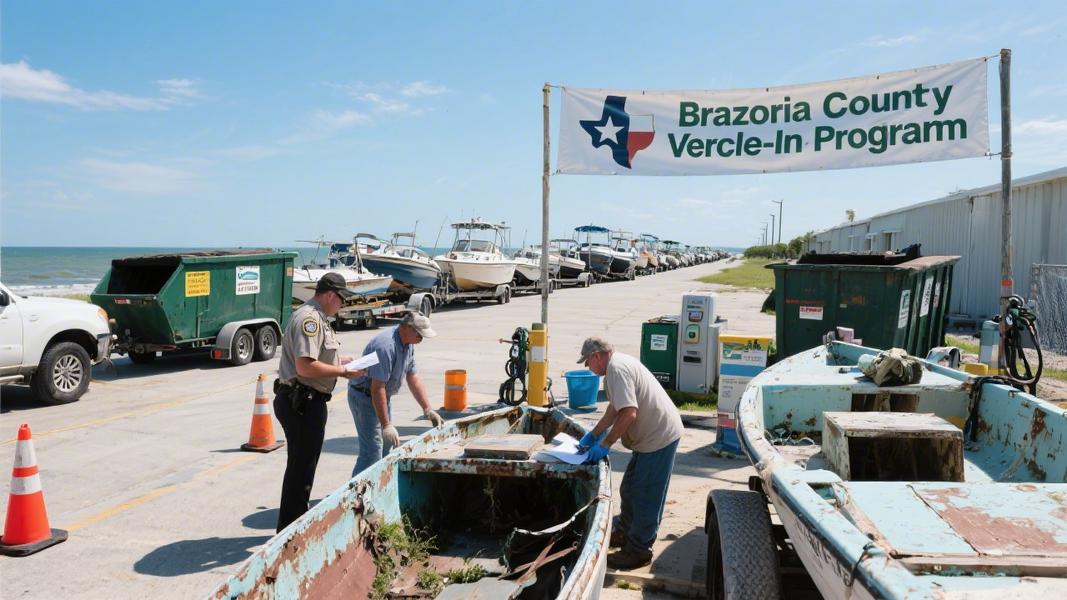
Abandoned boats don’t just look bad — they leak fuel, harbor debris, and quietly degrade the coastal ecosystems that communities like Brazoria County depend on. Now, officials are offering residents a rare, no-cost way to get rid of them.
Texas Land Commissioner Dawn Buckingham is urging Brazoria County boat owners to take advantage of an upcoming Vessel Turn-In Program (VTIP) event, scheduled for April 6–9, 2026, running daily from 8:00 a.m. to 5:00 p.m. The program is free, voluntary, and designed to make responsible disposal as painless as possible — no excuses, no fees, no red tape for the average owner who just wants that old hull gone.
What the Program Actually Does
Here’s how it works. Vessel owners who qualify can simply relinquish their unwanted boats at designated drop-off locations arranged by Brazoria County, which is also providing landfill services for the scrapped vessels. The Texas Parks and Wildlife Department (TPWD) handles ownership verification on-site, while the Texas General Land Office (GLO) and the Brazoria County Firefighters Association take care of removing oil, fuels, and other hazardous materials before disposal. It’s a coordinated operation — and frankly, a fairly elegant one.
The GLO and TPWD work together to verify that each vessel qualifies under program guidelines before it’s accepted. That step matters. It keeps the event focused on genuinely unwanted, problem vessels rather than becoming an informal junkyard sweep.
The Legal Muscle Behind It
This isn’t just a goodwill gesture from local officials. The GLO’s authority to act on derelict and abandoned vessels stretches back more than three decades. The Oil Spill Prevention and Response Act of 1991 (OSPRA) explicitly authorizes the agency to remove and dispose of abandoned vessels from Texas coastal waters — a mandate that has only grown more relevant as aging recreational boats pile up along the Gulf Coast.
Derelict vessels are, in many ways, slow-motion environmental hazards. They corrode. They sink. They bleed petroleum into marshes and bays that support commercial fishing, wildlife, and recreation. VTIP events like this one are a proactive attempt to intercept that damage before it compounds.
Who Should Pay Attention
So who’s this really for? If you’ve got a vessel sitting in a yard, a slip, or a bayou that you haven’t touched in years — and you know, deep down, it’s not coming back — this is your window. The program is completely voluntary, and participating owners won’t be charged for disposal. That’s a meaningful incentive, given that private marine salvage and scrapping can cost thousands of dollars depending on vessel size and condition.
Residents looking to participate or get more information can contact Brazoria County directly at 111 E. Locust St., Angleton, TX 77515, or by calling 979-849-5711. Additional event details have also been posted through the county’s official channels.
A Cleaner Coast, One Boat at a Time
Still, the success of any voluntary program depends entirely on participation. Officials can set up the infrastructure, coordinate the agencies, and waive the fees — but if owners don’t show up, those boats stay put, rusting and leaking until the state is eventually forced to remove them at far greater public expense. The April window is short. Four days isn’t a lot of runway.
Commissioner Buckingham’s push to highlight this event reflects a broader philosophy at the GLO: that keeping Texas coastal waters clean is a shared responsibility, and that making it easy for people to do the right thing is often the most effective environmental policy there is. It’s harder to argue with a free pickup than a fine.
The boats that don’t make it to the drop-off site in April will still be out there in May — and the coast doesn’t clean itself.
