
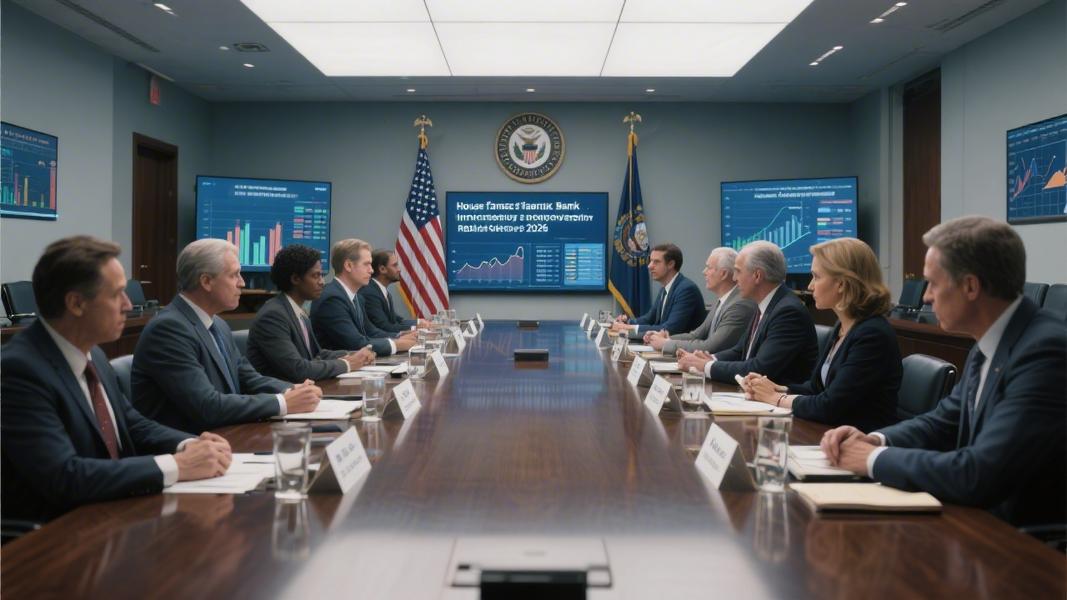
Washington’s top financial watchdog just rewrote the rulebook — again. The Financial Stability Oversight Council voted unanimously on March 25, 2026, to issue proposed interpretive guidance that would fundamentally reshape how the federal government identifies and regulates nonbank financial companies deemed threats to the broader economy.
At the heart of the move: a deliberate return to the philosophy that governed FSOC under the first Trump administration. The new proposed guidance would reinstate core elements of the 2019 framework, which prioritized scrutinizing risky activities across markets before pointing a finger at any single firm. It’s a significant pivot away from the Biden-era 2023 guidance, which critics said opened the door to broader, less predictable entity-level designations — and, they argued, did so with far too little transparency.
Back to Basics — With a Few New Wrinkles
Treasury Secretary Scott Bessent, whose department chairs the council, framed the vote in terms of mission clarity. “The Council has a vital mission – identifying and responding to potential threats to the stability of the financial system before they can translate into real economic harms,” Bessent said. “Today’s proposed guidance would return the Council to prioritizing an activities-based approach where we focus first on risks that arise from specific activities and practices across markets, rather than single out individual firms.”
But it’s not a carbon copy of 2019. The new guidance also weaves in considerations of economic growth and economic security as part of the risk analysis framework — a notable addition that reflects the current administration’s broader policy priorities. Whether that addition sharpens the council’s focus or muddies it is already a matter of debate among regulatory watchers.
A Fight That’s Been Brewing for Years
The tension over how FSOC designates nonbank financial companies — hedge funds, insurance giants, asset managers and the like — isn’t new. Under Section 113 of the Dodd-Frank Act, the council holds the authority to subject nonbank firms to Federal Reserve supervision if their potential distress or market activities could threaten U.S. financial stability. It’s a sweeping power, and one that the financial industry has spent years pushing back against.
Last July, a coalition of major financial trade associations formally urged FSOC to scrap the 2023 guidance and restore the 2019 framework. Their argument, outlined in a joint letter, was pointed: the Biden-era rules had stripped away procedural safeguards and reduced transparency in a process that was already opaque enough to make firms nervous about unpredictable designations.
Then, in December, SEC Chairman Paul S. Atkins added his voice to the chorus — pointedly, from inside the council itself. “I feel strongly that the Council should prioritize reintroducing the use of important safeguards against arbitrary and capricious designation, such as cost-benefit analysis and an assessment of the likelihood of material financial distress,” Atkins stated at a December 11, 2025 meeting. His mention of “arbitrary and capricious” wasn’t accidental — it’s the precise legal standard courts use to strike down agency rules, and a not-so-subtle signal that litigation risk loomed over the existing framework.
Why It Matters Beyond the Beltway
So why should anyone outside Washington care? Because FSOC designations carry real consequences. A firm tagged as a systemically important nonbank financial company faces heightened Federal Reserve oversight, stricter capital requirements, and stress testing — the kind of regulatory burden that can reshape a company’s strategy, competitiveness, and appetite for risk. Getting the designation process right — or wrong — ripples outward.
That’s the catch. An activities-based approach, as industry groups prefer, means regulators go after dangerous practices that span markets rather than singling out one firm for the full compliance treatment. Proponents say it’s more efficient and fair. Critics, particularly those who favor aggressive systemic risk oversight, worry it lets large, interconnected institutions off the hook until it’s too late.
The proposed guidance is now open for public comment, meaning the final version could look different from what was introduced this week. Still, the unanimous vote signals a council that is, at least for now, aligned — and moving fast.
Whether that alignment holds once the comment letters start piling up is another question entirely. Financial regulation has a way of getting complicated right when everyone thinks it’s been settled.
