
A federal judge has handed the Pentagon a stinging rebuke — and handed American journalists a rare, unambiguous win. On March 20, 2026, U.S. District Judge Paul Friedman vacated key provisions of the Defense Department’s controversial press access policy, ruling that it violated both the First and Fifth Amendments of the Constitution.
The decision strikes at restrictions that Defense Secretary Pete Hegseth had implemented in October 2025, which gave the Pentagon broad authority to screen journalists for security risks and to deny, revoke, or suspend their press credentials on those grounds. Judge Friedman didn’t mince words, finding that the policy was “unreasonable and, as such, infringes upon First Amendment rights.” Among the immediate effects: the New York Times was ordered reinstated to Pentagon access — credentials the outlet had lost under Hegseth’s regime.
Pentagon Complies — But Isn’t Backing Down
The Defense Department moved quickly to comply, releasing a revised Pentagon Reservation In-Brief for Media Members effective immediately. But compliance didn’t signal acceptance. “The Department always complies with court orders but disagrees with the decision and is pursuing an appeal,” the document stated plainly. So the fight, in other words, isn’t over.
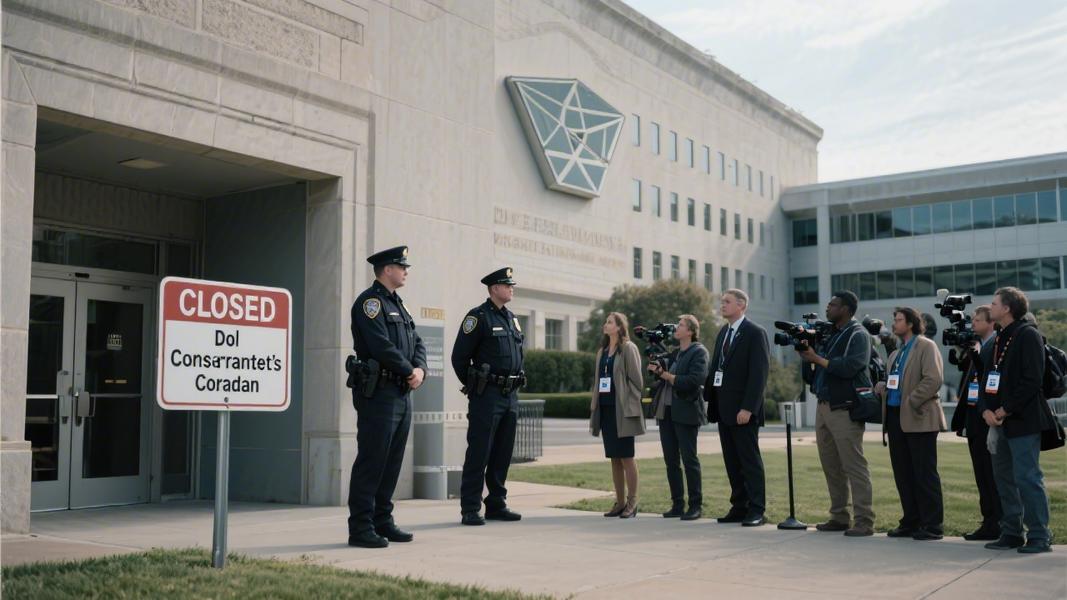
And the Pentagon’s response carried its own sting. Stripped of its ability to screen journalists for security risks, the department announced it was closing the Correspondents’ Corridor — the storied hallway where reporters had long maintained a physical foothold inside the building. “Effective immediately, the Correspondents’ Corridor is closed,” the revised policy declared. A new press workspace is to be established in an annex on Pentagon grounds, and all journalist access to the building will now require escort by authorized department personnel — though credential holders can still attend scheduled briefings, conferences, and interviews.
A Victory, With Asterisks
That’s the catch. The ruling restores constitutional standing, but the physical and practical architecture of Pentagon press access has been quietly reshaped. Reporters are back — technically. They just can’t move freely through the building the way they once did.
Still, the press freedom community wasn’t about to let procedural caveats dampen the moment. Charlie Stadtlander, a spokesperson for the Times, welcomed the ruling with pointed clarity: “Americans have a right to see how their government operates and to understand the military actions taken in their name and funded by their taxes.” National Press Club President Mark Schoeff Jr. called it “a decisive rebuke of an unlawful effort to restrict press access and a clear victory for press freedom,” saying the ruling affirmed that government can’t deny access based on how a news organization covers it.
Theodore Boutrous Jr., the attorney who argued the case, framed the stakes even more broadly. “The district court’s opinion is not just a win for The Times, Mr. Barnes, and other journalists, but most importantly, for the American people who benefit from their coverage of the Pentagon,” he told reporters. The ruling, he said, reaffirms the right of independent media to keep asking hard questions on the public’s behalf.
The Bigger Picture: Venezuela, Iran, and Why It Matters Now
Why does any of this matter beyond the Beltway? Katherine Jacobsen, U.S. Program Coordinator for the Committee to Protect Journalists, offered a sharp answer. “Recent United States military activity in Venezuela and Iran make journalists’ access all the more critical,” she noted, calling the ruling an important step toward restoring that access. When the military is operating in active theaters, the argument for keeping reporters out doesn’t just become legally dubious — it becomes a democratic problem.
On the ground, some journalists who’d already been cut off made clear they weren’t waiting for a courtroom to keep doing their jobs. J.J. Green, WTOP’s national security correspondent, put it simply: “Just because we’re out, not inside, doesn’t mean we stopped those people… We’re still continuing to do it.” The pressure, he added, was going to continue regardless of what happened with the corridors or the credentials.
What Comes Next
The Pentagon’s appeal means this ruling isn’t the final word. Higher courts will have their say, and the Hegseth-era instinct to treat the press as a security liability — rather than a constitutional fixture — hasn’t disappeared. The Correspondents’ Corridor sits empty. The escort requirement remains. And somewhere in the appellate pipeline, lawyers are already drafting briefs.
But for now, the courts have drawn a line. As the Times itself put it, the ruling “reaffirms the right of The Times and other independent media to continue to ask questions on the public’s behalf.” In an era of active military operations, tightening information controls, and escalating tensions over press access, that affirmation — even a temporary one — is not nothing.
