
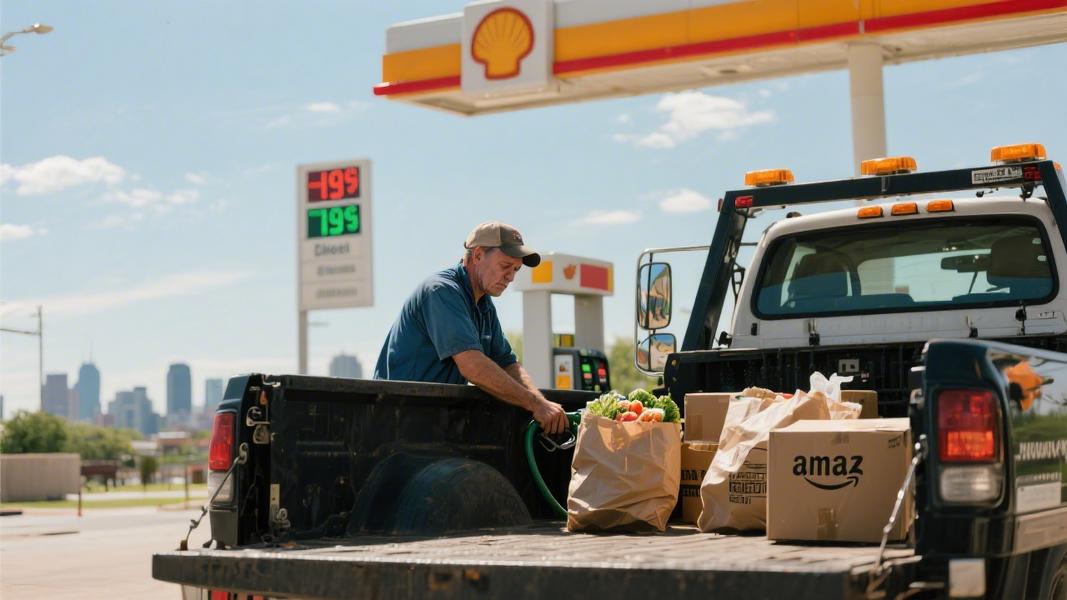
Diesel prices in Texas have surged to levels that are squeezing truckers, farmers, and small businesses alike — and there’s little sign of relief on the horizon.
The average price of diesel fuel across the Lone Star State has climbed to $5.147 per gallon, a jarring jump from just $3.213 per gallon one year ago, according to data tracked by AAA. That’s roughly a 60 percent increase in twelve months — a spike that’s reverberating through virtually every corner of the Texas economy.
Who Feels It First
Diesel isn’t gasoline. It doesn’t power the family sedan on the school run. It powers the eighteen-wheelers hauling goods across I-10, the tractors turning soil in the Panhandle, the refrigerated trucks keeping grocery store shelves stocked. When diesel prices climb this fast, the pain doesn’t stay at the pump — it moves downstream, fast, into the cost of almost everything.
How bad is it, really? Consider that a long-haul trucker burning through roughly 20,000 gallons of diesel a month is now spending nearly $40,000 more annually than they were just a year ago. For independent operators running on thin margins, that’s not an inconvenience. That’s a crisis.
A Perfect Storm at the Pump
The causes aren’t mysterious, even if the timing feels relentless. Refinery constraints, global supply disruptions, and the ongoing volatility in energy markets have all conspired to push distillate fuel prices upward. Texas, for all its oil-producing might, isn’t immune. The state produces the crude, but refined diesel prices are set by a global market that doesn’t much care about state lines.
Still, the scale of the increase — nearly two dollars a gallon in a single year — is striking even by the standards of a notoriously volatile commodity. Energy analysts have pointed to reduced refining capacity and persistently strong demand as key drivers, with no immediate catalyst likely to push prices back toward where they were in early 2021.
Ripple Effects Across the State
It’s not just trucking. Texas agriculture, which depends heavily on diesel-powered equipment, is facing sharply higher operating costs heading into planting season. Construction crews, already dealing with elevated materials costs, are watching fuel bills balloon. And municipalities running diesel-powered fleets — buses, emergency vehicles, utility trucks — are scrambling to adjust budgets that were drafted when fuel cost far less.
That’s the catch with diesel. Its price hike doesn’t generate the same headlines as gasoline, but its economic footprint is arguably wider. Nearly every physical good that moves in this country spends time on a diesel-powered vehicle. When that fuel costs 60 percent more, someone’s paying for it — and more often than not, it’s the consumer at the end of the line.
What Comes Next
There’s no clean answer here. Futures markets suggest some modest easing could come later in the year, but forecasting energy prices has humbled far smarter people than most. For now, Texas businesses and working drivers are doing what they’ve always done — absorbing what they can, passing on what they can’t, and hoping the math eventually works back in their favor.
At $5.147 a gallon, though, hope isn’t much of a business plan.
