
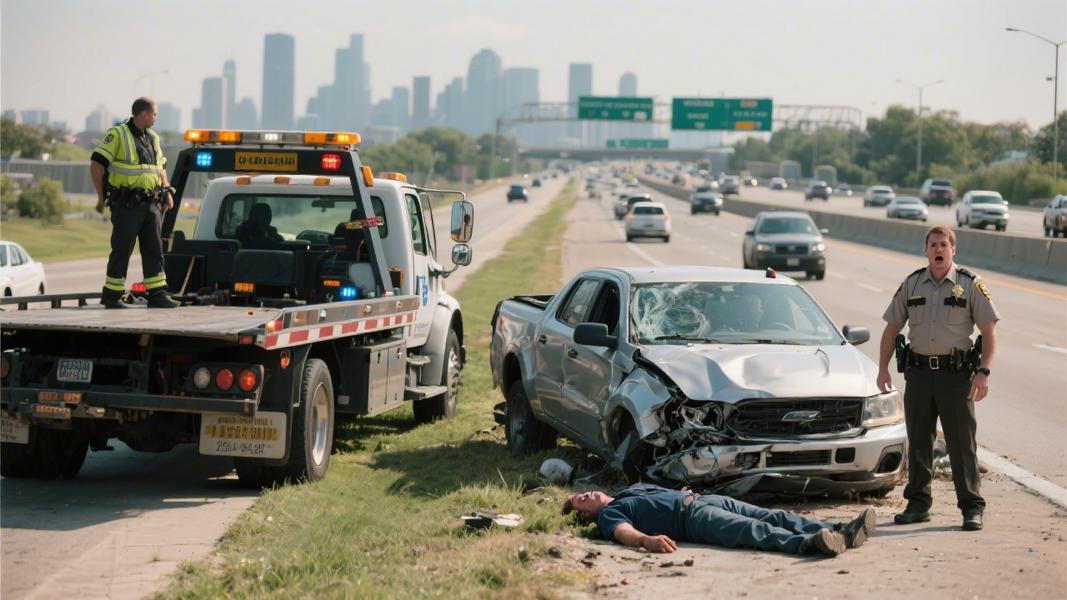
A tow truck driver is dead after being struck by a vehicle on Interstate 20 in Dallas — the kind of tragedy that keeps happening on Texas highways, and the kind that safety advocates say doesn’t have to.
The fatal crash occurred in the early morning hours of March 19, 2026, when a tow truck operator working on the side of I-20 was hit by a passing vehicle. Dallas-area first responders arrived to find the worker unresponsive. He was pronounced dead at the scene. The driver of the striking vehicle remained at the scene and cooperated with investigators, according to authorities.
A Dangerous Job Just Got Deadlier
Tow truck drivers occupy one of the most quietly dangerous jobs in America. They work at the edge of live traffic, often in low light, often when other drivers are impaired, distracted, or simply not paying attention. Texas roads — wide, fast, and frequently chaotic — have claimed more than a few of them. This latest death is a grim addition to a list that’s been growing for years.
The incident unfolded on a stretch of I-20 that sees heavy commercial and commuter traffic even in the pre-dawn hours. Exactly what led the striking vehicle into the tow truck operator’s path is still under investigation by Dallas police. Speed, inattention, and poor visibility are all factors that investigators typically examine in these cases, though no official determination had been released at the time of initial reporting.
Move Over Laws — On Paper, Anyway
Here’s the uncomfortable truth: Texas has a Move Over law. Has had one for years. It requires drivers to shift lanes — or, if that’s not possible, slow down significantly — when approaching stationary emergency vehicles, law enforcement, and tow trucks with flashing lights. Violations can carry fines and, in cases involving injury or death, criminal charges.
And yet, workers keep dying.
Safety organizations have long argued that awareness campaigns and fines aren’t enough. The law exists, enforcement is sporadic, and drivers — distracted by phones, exhausted from night shifts, or just not thinking — blow past flashing lights at highway speeds with terrifying regularity. The Texas Department of Transportation has pushed public messaging on Move Over compliance for years, but the data tells a stubborn story: roadside fatalities haven’t meaningfully declined.
Who Was He?
The victim’s name had not been officially released as of initial coverage by CBS Texas journalist Doug Myers, pending family notification. What is known is that he was actively doing his job — presumably assisting a disabled vehicle, the unglamorous but essential work that tow operators perform thousands of times a day across the state. He showed up to work. He didn’t go home.
That’s the part that tends to get lost in the clinical language of accident reports and traffic investigations. These aren’t statistics. They’re people who kissed someone goodbye before a shift they never finished.
A Pattern Dallas Can’t Ignore
Dallas and its surrounding metro area have seen a troubling concentration of roadside worker fatalities in recent years. The city’s highway infrastructure — a web of interstates cutting through dense urban and suburban terrain — creates constant friction between high-speed traffic and the workers who keep that system functioning. Construction crews, police officers, paramedics, and tow operators all share that risk.
Still, tow truck drivers often get the least protection and the least attention. They’re private contractors, not municipal employees. There’s no union press release when one of them dies. The news cycle moves fast, and by the next morning, the flares have been cleared and traffic is flowing again like nothing happened.
What Comes Next
Dallas police are expected to continue their investigation into the circumstances of the crash. Whether charges will be filed against the driver of the striking vehicle depends heavily on what investigators find — toxicology results, dashcam footage, witness accounts, and the physical evidence left at the scene all factor into that determination. In Texas, causing death by failing to comply with Move Over laws can rise to the level of a criminal offense, though prosecutions remain relatively rare.
Advocacy groups are likely to point to this death — as they have pointed to others — as evidence that stiffer penalties, better highway design, and more aggressive enforcement are overdue. Whether that argument gains traction in Austin is another question entirely. Legislative sessions in Texas are crowded, and roadside worker safety doesn’t tend to generate the same urgency as other transportation issues until the deaths pile up visibly enough to demand a response.
For now, one family is grieving. One stretch of I-20 has moved on. And somewhere tonight, another tow truck driver is pulling onto a shoulder with lights flashing, trusting that the cars behind him will do what the law says they’re supposed to do.
Most of the time, they do. Most of the time isn’t good enough.
