
Washington’s top economic diplomat has been busy — and not just at home. Over the past several months, Treasury Secretary Scott Bessent has carved out an increasingly prominent role on the global stage, from the Swiss Alps to Seoul to a high-stakes bilateral sit-down with Canada’s finance chief, all while managing a domestic fiscal outlook that’s anything but calm.
The flurry of activity reflects a deliberate strategy by the Trump administration to reassert American leadership on international economic policy — particularly around critical minerals, inflation, and financial market stability. Whether that strategy is working is a more complicated question.
Canada, Korea, and the Race for Critical Minerals
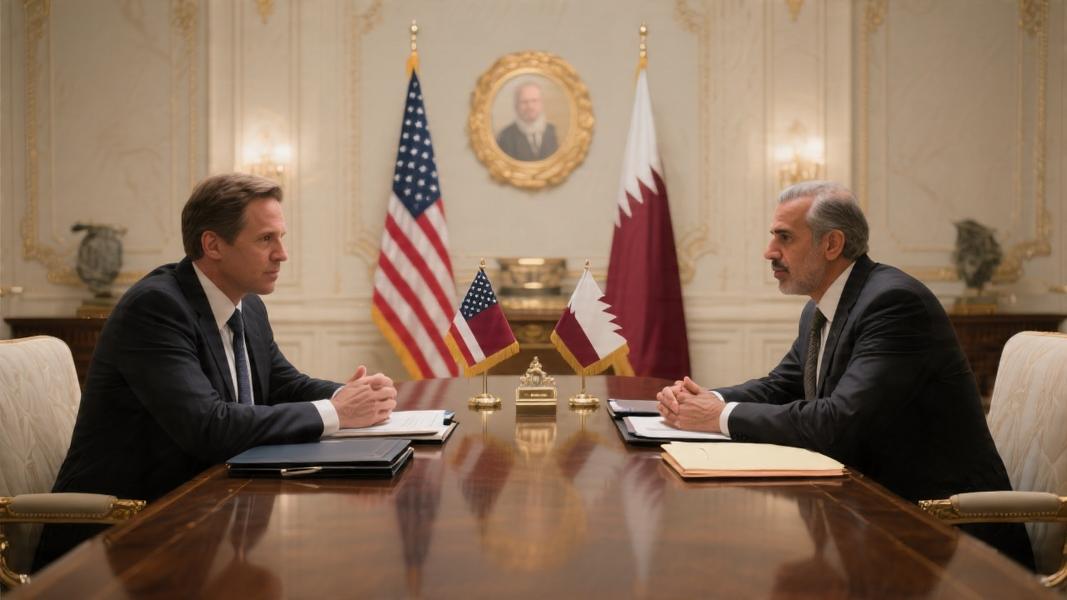
On April 19, 2026, Bessent sat down in Washington with François-Philippe Champagne, Canada’s Minister of Finance and National Revenue, for what the Treasury Department described as a direct bilateral meeting between the two countries’ top financial officials. The timing wasn’t incidental. It came in the wake of a broader Finance Ministerial meeting Bessent had convened — one that put the scramble for rare earth elements and critical minerals squarely at the center of allied economic planning.
Champagne was among the ministers at that gathering, which focused specifically on securing and diversifying critical minerals supply chains — a pressure point that’s grown sharper as geopolitical tensions with China have made Western dependence on Beijing-controlled supply routes increasingly untenable. Bessent, for his part, struck a notably measured tone. He expressed optimism “that nations will pursue prudent derisking over decoupling,” adding that world leaders “understand well the need to remedy current deficiencies in critical minerals supply chains,” according to a Treasury statement.
That’s a careful distinction — derisking, not decoupling — and it signals something important about how the administration is framing this moment. The goal isn’t to sever ties with China entirely. It’s to make those ties less dangerous if they break.
South Korea was also brought into the fold. Bessent met with Deputy Prime Minister Koo Yun Cheol on January 12 to lay groundwork for the critical minerals ministerial, according to a Treasury release. Seoul, with its advanced semiconductor and battery manufacturing base, is a natural partner in any serious effort to build out alternative supply chains — and bringing them to the table early suggests the administration isn’t treating this as a photo-op exercise.
On the Home Front: Inflation, Stability, and the Fiscal Tightrope
Still, for all the globe-trotting, Bessent can’t escape the domestic pressures bearing down on the U.S. economy. On April 15, 2026, he held a press briefing covering the full sweep of economic concerns — fiscal outlook, inflation trends, and financial stability measures — that underscored just how much is in motion right now. That same day, he delivered a separate formal address on global economic stability, touching on financial market risks and the case for coordinated international financial policy. Two major public appearances in a single day. The optics suggest urgency, even if the tone stayed measured.
A Treasury press briefing from that date offered a window into how Bessent is positioning the administration’s economic stewardship heading into what promises to be a turbulent stretch. Inflation pressures haven’t fully abated. Markets remain jittery. And the fiscal picture — with deficits that have proven stubbornly resistant to political will — isn’t exactly a selling point.
How does a Treasury Secretary thread that needle in public? Carefully, it turns out. Bessent has leaned heavily on the theme of structural reform and long-term discipline, a message he’s been road-testing since at least January 20, 2026, when he appeared at the World Economic Forum in Davos for a wide-ranging conversation that touched on America’s economic trajectory and its place in a fracturing global order.
Financial Literacy and the Longer Game
Not every entry on Bessent’s calendar has carried geopolitical weight. On February 6, 2026, he delivered remarks before the Financial Literacy and Education Commission — a quieter moment, but one that fits a broader pattern. The Treasury’s own archive of his statements and speeches shows a secretary who’s been unusually active on the public communications front, making the rounds across audiences ranging from international finance ministers to domestic policy commissions.
That’s not accidental. In a media environment where economic anxiety runs high and trust in institutions runs low, showing up — and speaking plainly — is itself a form of policy.
But it’s not that simple. Bessent is operating at a moment when the rules of global economic engagement are being rewritten in real time, when the supply chains that underpin modern economies are being stress-tested, and when the margin for error — financial, diplomatic, political — is razor thin. Optimism about “derisking over decoupling” is a reasonable bet. It’s just not a guaranteed one.
As one veteran trade economist put it recently, the real test of any critical minerals strategy isn’t the ministerial communiqué — it’s what’s in the ground five years from now, and who controls it.
