
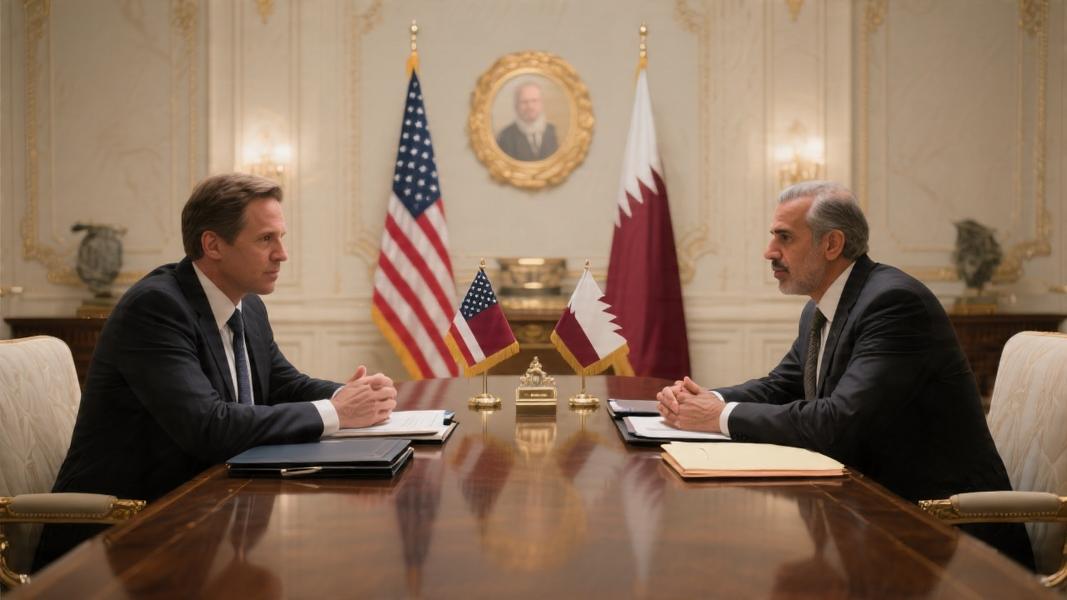
Washington’s financial diplomacy in the Gulf is moving fast — and Iran is never far from the conversation. A series of high-level meetings between U.S. Treasury Secretary Scott Bessent and senior Gulf finance officials has put economic security, regional stability, and the specter of Iranian aggression squarely at the center of American foreign economic policy.
The core of it: Bessent has been quietly but deliberately deepening Washington’s financial ties with Gulf Cooperation Council nations, even as Iran’s military provocations rattle energy markets and unsettle the region’s economic outlook. These aren’t ceremonial handshakes. They’re working sessions, with real agreements and pointed language about deterrence.
Qatar Takes Center Stage
Bessent met with Qatari Finance Minister Ali bin Ahmed Al Kuwari on April 18, 2026, in Washington — one of at least three documented engagements between the two officials across different settings and months. The talks covered Iran’s attacks against GCC countries and their economic ripple effects, a topic that’s become something of an unwelcome constant in Gulf financial diplomacy.
The relationship between Washington and Doha, it turns out, is about a lot more than energy exports. Bessent made that clear, emphasizing what he called the “strong economic, investment, and national security ties” between the two countries — ties he’s said he intends to build on throughout his tenure. That’s the kind of language that signals strategic intent, not just diplomatic courtesy.
There was also a notably warmer note in the exchange. Bessent expressed gratitude to Minister Al-Kuwari for Qatar’s role in backing President Trump’s peace plan for Gaza — a nod to Doha’s indispensable position as a back-channel broker in one of the world’s most intractable conflicts. Qatar, for its part, hosted a separate meeting with Bessent in Doha in May, where both sides reviewed bilateral relations, cooperation, and trade — a follow-up that underscored just how active this particular diplomatic lane has become.
A Deal With Riyadh, and a Warning to Tehran
Qatar isn’t the only Gulf capital getting attention. Bessent also sat down with Saudi Finance Minister Mohammed Al-Jadaan, and that meeting produced something concrete: a signed Tax Information Exchange Agreement between the United States and Saudi Arabia. The agreement, formalized during their session, is the kind of bureaucratic milestone that rarely makes headlines but carries real weight in cross-border investment and financial transparency circles.
Still, it’s the Iran question that keeps surfacing. In a separate statement, Bessent expressed direct solidarity with the United Arab Emirates following Iranian missile strikes — language that was unusually pointed for a Treasury Secretary. He emphasized that the United States is actively seeking to deter future attacks and ensure energy markets aren’t further destabilized by Iranian aggression. That’s not standard Treasury boilerplate. That’s a secretary of the treasury wading into security deterrence — because, in the Gulf, you can’t separate the two.
The Bigger Picture
What does Washington actually want here? Bessent has been fairly direct about that, too. Beyond bilateral trade and investment, he’s affirmed the Treasury’s intent to expand American leadership in the Bretton Woods system — the post-World War II financial architecture that still underpins global monetary cooperation. Invoking Bretton Woods in conversations with Gulf sovereign wealth powerhouses isn’t accidental. It’s a signal that the U.S. sees these partnerships as part of a larger effort to shore up dollar-denominated financial order at a moment when that order faces real pressure.
How much of this translates into lasting structural change? That’s harder to say. Gulf states have their own calculations — hedging between Washington, Beijing, and regional powers in ways that don’t always align neatly with American interests. But the pace and depth of these engagements suggest Bessent is at least trying to get ahead of that drift.
For now, the message from Treasury is consistent: the U.S. is invested in Gulf stability, economically and otherwise — and Iran’s behavior is making that investment more urgent by the day.
The question no one in these meetings is saying out loud is how long diplomacy and deterrence can hold the line before one of Iran’s strikes tips the balance in ways no tax agreement or trade framework can absorb.
