
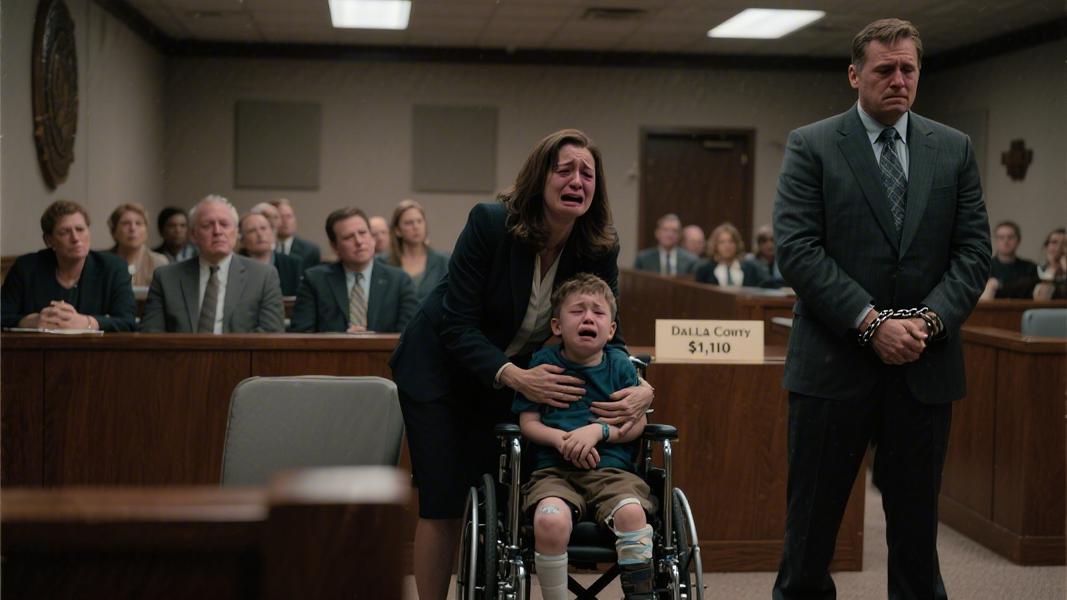
Across courtrooms, Capitol Hill, and federal funding offices, a stark pattern is emerging: the systems meant to protect America’s most vulnerable children are being tested — and, in some cases, failing outright.
From a $1.1 billion verdict in Texas to a bipartisan Senate bill targeting silenced abuse survivors, a wave of legal and legislative action is reshaping how the country reckons with child exploitation, institutional negligence, and the long, complicated road to accountability. The cases are different. The stakes are not.
A Billion-Dollar Verdict in Dallas
Let’s start with the number that stopped people cold. A Dallas County jury awarded $1.1 billion to a 7-year-old child and his family after finding stepfather Charles Brooks, Jr. responsible for abuse so severe the boy was left requiring a wheelchair. It’s a staggering figure — one that reflects not just the jury’s outrage, but a broader reckoning with how courts are beginning to price the destruction of a child’s life.
That said, verdicts of this magnitude rarely translate to full collection. But the signal sent to abusers — and to the legal system — is unmistakable. Juries are done being quiet about it.
Cruz’s Bill and the Silence That Kills
On the legislative front, Sen. Ted Cruz is leading a rare bipartisan push with TREY’S Law, a bill that would void and prohibit confidentiality clauses in child sex abuse cases. The law is named after Trey Carlock, who died by suicide after being bound by a non-disclosure agreement that kept his abuse hidden. Cruz didn’t mince words when he announced the bill: “No child who has endured sexual abuse should be forced to carry that horror in silence. Non-disclosure agreements are too often used to protect abusers, with incalculable and catastrophic consequences for their victims.”
It’s a striking moment — Cruz and his Democratic co-sponsors agreeing on anything is news in itself. But the substance here is what matters. NDAs in abuse cases have long functioned as legal gag orders that shield institutions and predators while leaving survivors to quietly deteriorate. Trey Carlock’s story is not an outlier. It’s a pattern.
Roblox, Grooming, and a Legal Reckoning
Meanwhile, the courtroom battle over one of the world’s most popular gaming platforms is picking up momentum. Attorneys at Anapol Weiss are part of a growing multidistrict litigation consolidating dozens of lawsuits alleging that Roblox facilitated child sexual exploitation and grooming. The consolidation itself was called “a major procedural victory that will streamline complex discovery and give victims and their families a clear path forward.”
Hundreds of millions of children use Roblox. That’s not hyperbole — it’s the platform’s own marketing. Which makes the allegations here particularly chilling, and the legal consolidation particularly significant. When dozens of individual lawsuits become one coordinated case, discovery gets deeper, patterns get harder to deny, and corporations lose the luxury of settling cases in silos.
The Nassar Blueprint — and What Came After
None of this exists in a vacuum. The modern template for large-scale institutional abuse accountability was arguably forged in the Larry Nassar case, where attorney Michelle Simpson Tuegel represented gymnasts in a landmark $380 million settlement with USA Gymnastics. Nassar himself received sentences of up to 175 and 125 years, as documented in the firm’s case history.
That settlement didn’t just compensate survivors. It rewrote how advocates, lawyers, and even sports governing bodies think about institutional complicity. The question it left hanging — one that echoes in every case since — is how many institutions knew, and for how long, before anyone said a word.
Prison Walls and a $19 Million Answer
The abuse doesn’t stop at childhood, either. A jury delivered a $19.3 million verdict in favor of a woman identified as Jane Doe in a prison sex abuse case — $8 million in compensatory damages and $11.3 million in punitive damages against prison officials. Attorney Stupar described the outcome plainly: “The amazing thing about this verdict is the jury responded loud and clear to what they heard that this is not OK.”
Punitive damages at that level aren’t just symbolic. They’re designed to hurt institutions financially enough that ignoring abuse becomes costlier than preventing it. That’s the math reformers have been trying to change for decades.
Federal Funding — and the Whiplash in Dallas
How bad is the uncertainty around mental health funding right now? Ask Dallas County. Providers there were initially promised access to $2 billion in federal mental health funding — money that was then yanked by executive order before being, at least partially, restored. The whiplash left clinics, counselors, and trauma specialists in limbo, unsure whether to hire, expand, or brace for cuts.
It’s a cruel irony. At the very moment courts are awarding billion-dollar verdicts to abuse survivors and legislators are pushing bills to protect them, the funding infrastructure that actually helps those survivors heal is being treated like a line item in a budget negotiation. The legal wins are real. But they don’t pay for the therapy sessions, the crisis hotlines, or the community workers who catch kids before things get catastrophic.
The courtroom, it turns out, is only one part of the equation — and justice, as any survivor will tell you, doesn’t end with a verdict.
