
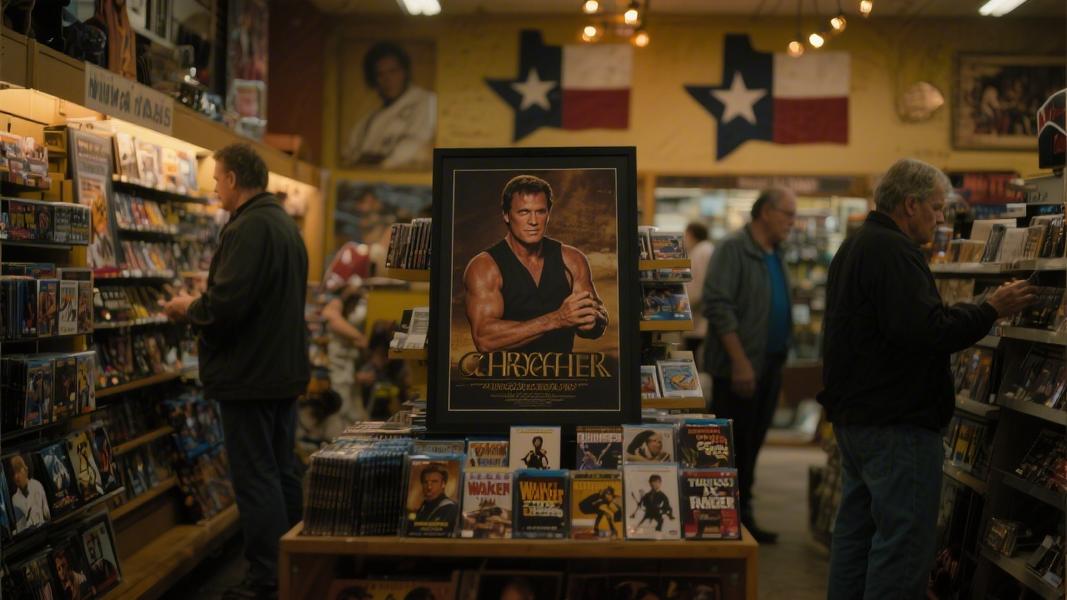
Chuck Norris — the martial artist, actor, and cultural force who became something closer to mythology than mere celebrity — has died. He was 86.
Norris passed away Thursday, March 19, 2026, in Hawaii, one day after he was rushed to a hospital on the island of Kaua’i following a medical emergency. The nature of that emergency has not been disclosed. His family confirmed the news in a brief but deeply personal statement, asking for privacy even as they shared their grief with the world.
A Family’s Farewell
“It is with heavy hearts that our family shares the sudden passing of our beloved Chuck Norris yesterday morning,” the statement read. “While we would like to keep the circumstances private, please know that he was surrounded by his family and was at peace.” It’s a quiet, dignified send-off for a man who spent decades in the public eye — and who, by all accounts, preferred substance over spectacle when it really counted.
What makes the timing all the more striking: just nine days before his death, on March 10 — his birthday — Norris posted what would become his final message to fans from Hawaii. “Thank you all for being the best fans in the world,” he wrote. “Your support through the years has meant more to me than you’ll ever know. God Bless, Chuck Norris.” Few final words feel as fitting.
Texas Roots, Lasting Bonds
For all the global fame, Norris had a particular and lasting connection to North Texas, forged during the years he lived and filmed there — most notably during the long run of Walker, Texas Ranger throughout the 1990s. That show turned him from action-movie icon into a weekly fixture in American living rooms. It also planted roots that ran deeper than a film set.
Jack Graham, Senior Pastor of Prestonwood Baptist Church in Dallas, counted Norris as a close friend and congregant for nearly a decade during those filming years. His tribute was warm and direct. “Chuck Norris was a great friend and brother in Christ,” Graham said. “Chuck was obviously a man’s man, but he was also God’s man.” He added that Norris “leaves behind a lasting legacy as a faithful believer and an indelible mark as a cultural legend.” That’s not the kind of eulogy you write for someone you barely knew.
Texas, for its part, made the relationship official. In 2010, then-Governor Rick Perry named Norris an Honorary Texas Ranger — a title that carried a certain poetic weight given the role that had defined so much of his later career. The Texas Senate followed by granting him an honorary Texan designation. In a state not short on larger-than-life figures, he earned his place among them.
The Measure of the Man
How do you sum up a life like his? Honestly, you probably can’t. Norris spent decades as a legitimate martial arts champion before Hollywood came calling, and even after it did, he never quite fit the mold of a conventional star. He was too earnest for irony, too physical for the drawing room, too openly faithful for a culture that often rewards ambiguity. And yet — or maybe because of all that — he endured. The jokes about his invincibility became a strange kind of tribute, a pop-culture shorthand for toughness that outlasted almost every trend around it.
He was hospitalized Wednesday on Kaua’i, where he had been spending time in the islands he’d called home in his final years. By Thursday morning, he was gone. His family has asked that the medical details remain private, and there’s no reason not to honor that.
Still, what lingers isn’t the circumstance of his death — it’s the weight of what he left behind. Pastor Graham put it plainly: Norris loved his country, served it, and lived his convictions out loud. “He was truly an icon in so many areas,” Graham said. That much is hard to argue with. The man roundhouse-kicked his way into the American imagination and never quite left.
His last public words were a thank-you. That seems about right.
