
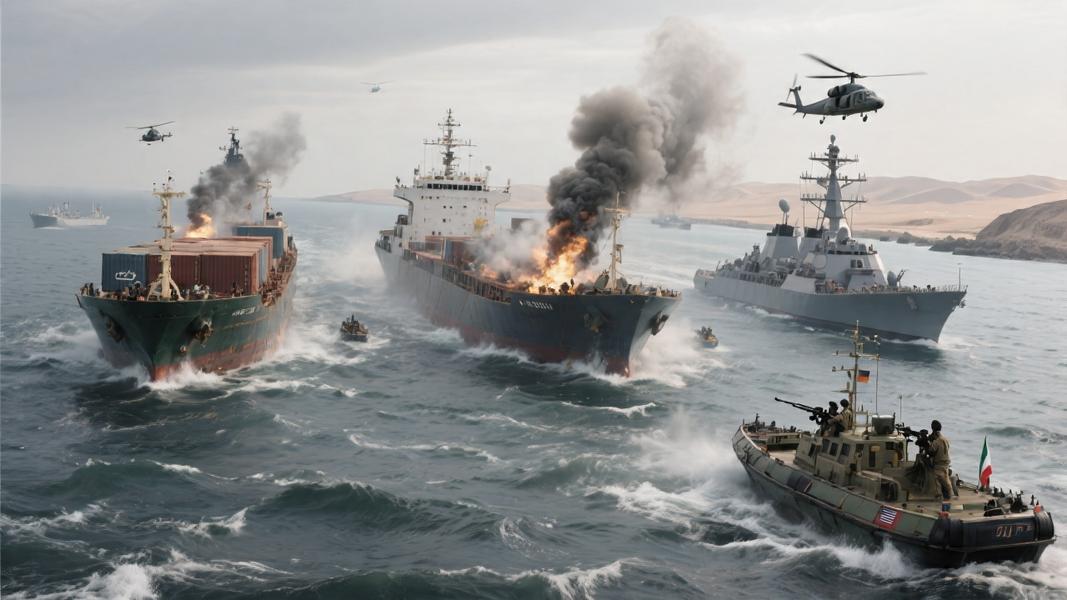
Iran seized two cargo ships and left a third grounded in the Strait of Hormuz on Wednesday, even as President Donald Trump announced an extension of the fragile ceasefire with Tehran — a jarring collision of diplomacy and aggression that underscored just how volatile the situation has become.
The twin developments put the already-strained nuclear negotiations in fresh jeopardy. Trump said the ceasefire would hold “until such time as their proposal is submitted, and discussions are concluded, one way or the other,” citing fractured Iranian leadership and a mediation request from Pakistan as reasons for the extension. But within hours of that announcement, Iranian forces were boarding ships in one of the world’s most critical maritime chokepoints.
Ships Seized, Shots Fired
Iranian state television confirmed that the MSC Francesca and the Epaminondas were seized by the Islamic Revolutionary Guard Corps and brought to Iranian waters. A third vessel, the Euphoria, was attacked and left stranded off Iran’s coast, its hull reportedly grounded after taking fire. The Panama-flagged MSC Francesca sustained hull and accommodation damage in the assault, according to details described in subsequent reporting.
Iran’s Nour News Agency offered its own justification for the strikes, saying forces opened fire only after the vessel ignored repeated warnings. The IRGC accused the ships of having “allegedly operated without authorization, repeatedly violated regulations, manipulated navigational aid systems and sought to covertly exit the Strait of Hormuz, endangering maritime security,” according to a statement released by Iranian authorities. Whether that account holds up under independent scrutiny is another matter entirely.
Among the targeted vessels was a British-flagged cargo ship, raising the diplomatic stakes well beyond a U.S.-Iran bilateral dispute. Three ships attacked in a single day. That’s not a warning shot — that’s a pattern.
The Blockade Factor
None of this exists in a vacuum. Iran is operating under a sweeping U.S. naval blockade that has cost Tehran an estimated $500 million per day in lost oil revenues, a figure that, if accurate, represents an economic stranglehold with few modern precedents. The blockade has also given Iran both a grievance and, it seems, a playbook — mining the Strait, demanding $2 million passage fees from commercial vessels, and now seizing ships outright, as noted in coverage of Iran’s maritime enforcement activity.
Still, the Revolutionary Guard’s campaign in the Strait isn’t just economic retaliation. It’s a message — broadcast to Washington, to shipping insurers, and to every captain currently plotting a course through those 21 miles of water.
Tehran’s Diplomatic Hedge
So where do the nuclear talks stand? That’s the harder question. Iran’s Foreign Ministry spokesman Esmail Baghaei was blunt, pointing to what he called contradictory messages from Washington and the naval blockade itself as reasons why Tehran hasn’t reached a final decision on negotiations. His comments were aired Wednesday, the same day the ship seizures were reported.
It’s worth noting the internal tensions that Trump himself alluded to. “Fractured Iranian leadership” isn’t a throwaway line — it suggests that whoever is sitting across the table in these talks may not have full control over what the IRGC does next. That’s a significant complication for any mediator, including Pakistan, which has stepped into a role that carries enormous risk and, if successful, enormous reward.
The Revolutionary Guard’s moves in the Strait appear, at minimum, to be operating on a separate track from whatever diplomatic signals Tehran’s foreign ministry is sending. Whether that’s coordinated ambiguity or genuine institutional fracture, the effect is the same: it makes Iran extraordinarily difficult to negotiate with in good faith, a reality that emerged clearly from Wednesday’s events.
What Comes Next
The ceasefire extension buys time — but time for what, exactly? The blockade continues. The ship seizures continue. Iran’s losses mount, and so does the pressure on its leadership, fractured or otherwise, to show some form of decisive action to a domestic audience that’s watching oil revenues evaporate.
Global shipping markets were already jittery before Wednesday. The attacks on three vessels in a single day — including one linked to British interests — will almost certainly push insurance premiums higher and reroute commercial traffic away from the Strait, which handles roughly 20 percent of the world’s oil supply. The economic ripple effects extend far beyond the Persian Gulf.
Trump’s ceasefire extension may be the right call diplomatically. But with the Revolutionary Guard firing on ships in the same hours that negotiators are supposedly inching toward a deal, it’s hard not to wonder whether the two sides are actually negotiating the same reality — or whether one of them is negotiating at all.
