
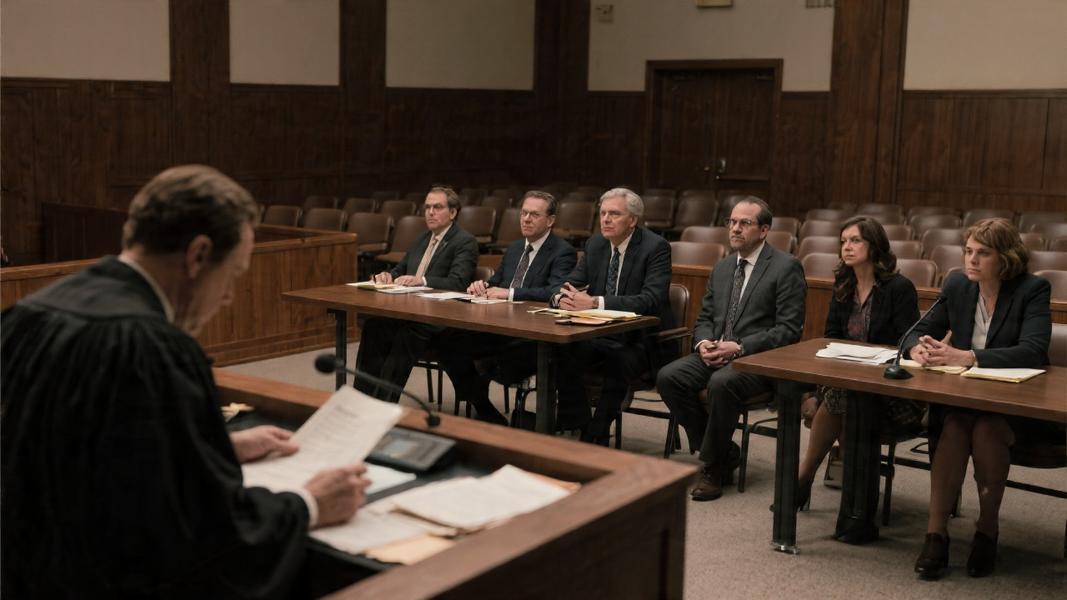
The sentencing trial for a FedEx driver who admitted to kidnapping and killing a 7-year-old girl is stretching into its third week — and a verdict may still be two weeks away.
Tanner Horner, who pleaded guilty to the capital murder of Athena Strand in late 2022, is now at the center of a high-stakes courtroom battle over whether he lives or dies. The only question left for a Texas jury isn’t guilt — that’s already settled. It’s punishment. And the gap between what the defense is arguing and what prosecutors are demanding couldn’t be wider. reported CBS News, the trial has been extended after the presiding judge took time to review expert testimony outside the jury’s presence, a procedural move that has pushed a potential verdict further down the calendar.
A Childhood Defense Built on Biology
The defense isn’t making a simple argument. They’re making nineteen of them — or at least, they plan to call 19 expert witnesses in an effort to convince jurors that Horner’s life is worth sparing. At the core of their case is a portrait of a man shaped, they say, by conditions largely outside his control. Experts testified that Horner was diagnosed with autism, fetal alcohol spectrum disorder, and evidence of serious head trauma. Perhaps most striking: childhood lead poisoning with blood levels 24 times higher than those of his peers.
That’s not a footnote. That’s a medical history the defense is betting a jury will find impossible to ignore. The argument, broadly, is that Horner’s Autism Spectrum Disorder — combined with the neurological damage wrought by years of lead exposure — diminishes his moral blameworthiness in a way that makes execution an inappropriate and disproportionate sentence.
An Alter Ego Named Zero
Then there’s “Zero.” A psychologist who evaluated Horner described how the defendant referred to an alter ego by that name — something the evaluator characterized as functioning like an imaginary friend. It’s the kind of detail that sounds almost clinical until you sit with what it’s being offered to explain. Horner admitted to killing Athena, telling investigators he initially kidnapped her because he was “concerned she saw him using cocaine.” The same psychologist noted, however, that Horner understands right from wrong — a concession that may matter enormously when jurors weigh the defense’s mitigation case.
But it’s not that simple, and the defense knows it.
Prosecution: No Mercy Given, None Owed
Prosecutors are not interested in neurological nuance. Their position is blunt and, strategically speaking, easy to follow: Horner argue showed no mercy for little Athena Strand, so the jury should show him none either. It’s an emotionally direct appeal — and in a Texas capital case, that kind of argument tends to land.
How much damage have the prosecution’s recordings done? Potentially, a lot. A legal analyst watching the proceedings observed that what the jury has already seen and heard may be insurmountable for the defense: “I don’t think there’s any way a defense expert can come in and provide any mitigating evidence that will overcome what we heard and saw in the courtroom.” That’s a stark assessment — and it’s one that frames the entire expert parade the defense is planning in a pretty unflattering light.
What Comes Next
Still, the trial grinds forward. The judge’s decision to review certain expert testimony away from the jury suggests the legal questions here aren’t entirely resolved — procedural delays in capital cases rarely are. With a verdict possibly two weeks out, both sides have time to make their final impressions. The defense will keep calling witnesses. The prosecution will keep pointing to what’s already in the record.
Athena Strand was seven years old. She was reported missing after a FedEx delivery to her home in Paradise, Texas, in December 2022. Her body was found two days later. Whatever the jury ultimately decides, her name will remain at the center of it — as it should.
The real question isn’t just what Tanner Horner deserves. It’s what a jury of twelve Texans, having heard everything, decides justice actually looks like when a child is gone and the man who took her is sitting right in front of them.
