
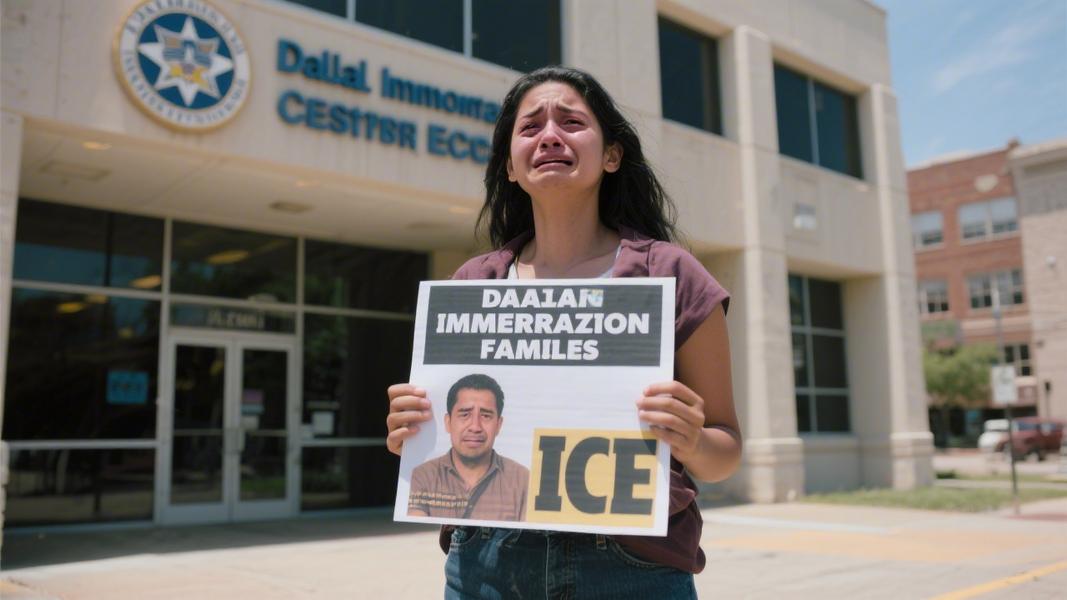
The request to write this article ran into a fundamental problem before the first sentence could be drafted: the source material simply isn’t there.
What was submitted for publication included a detailed account of Elena Adiletta and her husband Andres Guzman-Cano, reportedly detained at the Bluebonnet detention facility in Anson, Texas — a story that, on its face, reads as urgent and deeply human. But the supporting search results provided to verify and contextualize that account contain no reference to Adiletta, Guzman-Cano, or the specific events described. None of it.
Why That Matters
Publishing unverified claims — even sympathetic ones, even plausible ones — is how newsrooms get burned. It’s not a technicality. A named individual, a named facility, a specific set of events: each of those requires a sourced foundation before they appear under a masthead. Without it, what looks like journalism is something else entirely.
That’s the catch here. The story might be real. The Bluebonnet facility in Anson is documented as an active ICE detention site. Family detention cases involving mixed-status couples are not uncommon — they’ve been reported extensively by civil liberties organizations tracking enforcement patterns under recent administrations. The emotional architecture of the Adiletta account fits a pattern that journalists covering immigration have seen repeatedly. Still, none of that makes the unverified version publishable.
What the Available Record Does Show
The search results that were provided paint a clear enough picture of the broader landscape. ICE’s family detention infrastructure — anchored most visibly by the South Texas Family Residential Center in Dilley, Texas, which can hold over 2,400 individuals — has been a flashpoint for legal challenges, congressional scrutiny, and advocacy campaigns for years. The facility, operated under contract by the GEO Group, has faced persistent criticism over medical care standards, legal access, and the psychological toll of prolonged detention on children.
Dilley alone has cycled through periods of near-closure and sudden expansion depending on which administration holds the White House. That whiplash, advocates say, makes coherent policy nearly impossible to enforce — and makes the human cost nearly impossible to track.
The Path Forward
So where does that leave this story? Three options exist. First, provide the original sourced reporting on Adiletta and Guzman-Cano — a published article, court filing, or official statement — so it can be properly cited and woven into a verified piece. Second, commission a reported article drawing on the confirmed search results about ICE family detention, using Dilley and related facilities as the primary frame. Third, use both in combination: the verified institutional record as backbone, with the individual case added only once its sourcing is confirmed.
Any of those can produce something worth reading. What can’t happen — not here, not responsibly — is dressing up unverifiable claims in clean HTML and calling it news.
Because the difference between a story that holds up and one that doesn’t isn’t usually the writing. It’s the two minutes someone spent checking whether the facts were actually there.
