
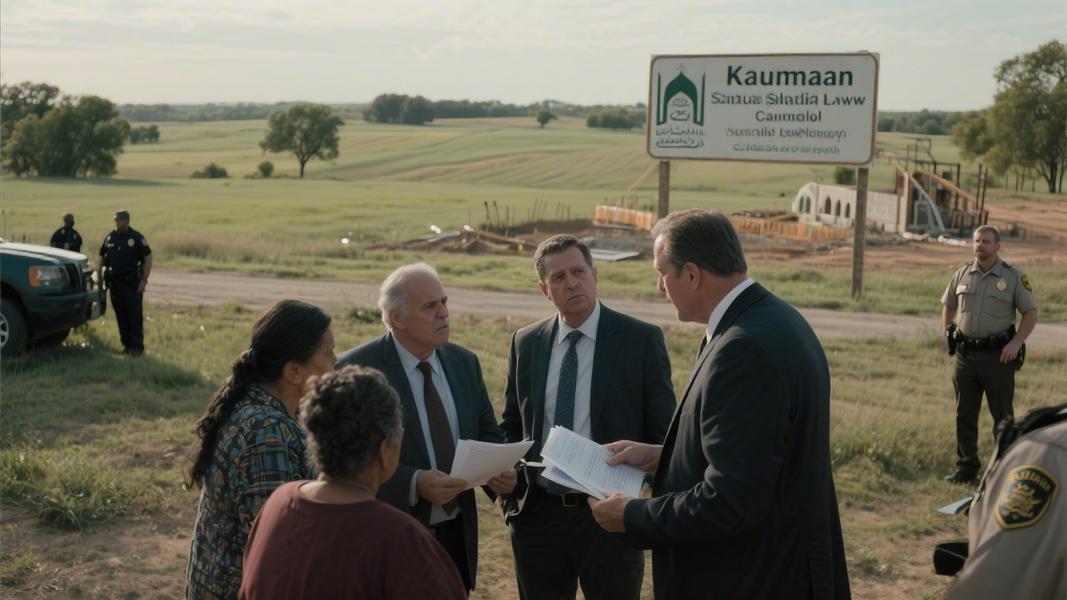
A proposed development in Kaufman County, Texas, that critics labeled a “Sharia City” has been abandoned — and Texas Attorney General Ken Paxton isn’t shy about taking credit for it.
The plans, tied to a U.S. subsidiary of Dubai-based SEE Holding and a company called Kaufman Solar LLC, envisioned a sprawling “sustainable city” on thousands of acres near Kaufman, Texas, potentially housing as many as 20,000 foreign nationals. What followed was a swift and pointed investigation by Paxton’s office — and, apparently, a quiet exit by the developers.
The Investigation
On February 9, 2026, Paxton’s office issued formal Requests to Examine, demanding documents related to communications with government officials, company relationships, real estate acquisitions, and the full scope of the development’s plans. It wasn’t subtle. The message from Austin was clear: we’re watching, and we want answers.
Paxton didn’t mince words publicly either. “There will be no ‘sharia city’ in Texas under my watch,” he declared, adding that the investigation would examine “any unlawful actions” connected to the project. “While you’re on American soil, you will obey America’s laws.”
That’s the kind of statement that plays well in certain rooms. But it also signals something substantive: state officials were genuinely alarmed by the nature of the project, its foreign backing, and what they saw as a potential effort to establish a community operating outside the norms of American civil law.
What Was Actually Being Planned?
So what exactly were these developers trying to build? According to the details that emerged, the project would have been a massive, largely self-contained residential development — thousands of acres, tens of thousands of residents, and a structure that raised red flags for investigators concerned about the influence of Islamic law, or sharia, in governing the community’s internal affairs.
The developers framed it as a sustainability initiative. Critics, including Paxton’s office, framed it as something else entirely. Whether the reality fell closer to one description or the other may never be fully known, since the project is now dead before it ever broke ground.
Developers Pull Out
Congressman Lance Gooden confirmed what Paxton’s office had been signaling: the developers have ended their plans in Kaufman County. No lawsuit. No public fight. Just a quiet withdrawal following the scrutiny — which, depending on your read, either vindicates the investigation entirely or raises questions about what evidence, if any, was actually uncovered.
Paxton, for his part, framed it as a victory with broader implications. “Because of the risks posed by the infiltration of sharia law into Texas, my office will work tirelessly to end any illegal scheme that seeks to subvert the Constitution and disrupt the American way of life,” he said. He added that his office would “continue to investigate any potential threat to the safety and well-being of Texans.”
Still, the absence of a formal legal action — no charges filed, no court proceedings announced — leaves the story with an unresolved edge. The development is gone. But the full picture of what it was, and whether it ever crossed a legal line, remains murky.
A Broader Signal
Texas isn’t the only state where questions about foreign-backed land development have gained traction. Across the country, lawmakers have grown increasingly wary of large-scale real estate acquisitions tied to overseas entities — particularly those with ties to Gulf states, China, and other foreign governments. The Kaufman County situation lands squarely in that broader national conversation.
What’s different here is the religious dimension — the explicit invocation of sharia law as a threat — which adds a layer of political and cultural complexity that goes beyond standard foreign investment concerns. It’s a distinction that will likely fuel continued debate long after the bulldozers never arrive.
For now, at least, the land outside Kaufman stays as it was. And Ken Paxton has one more story to tell on the campaign trail — whether or not the full chapter has actually been written.
