
The U.S. Army’s newest long-range missile didn’t just debut in a test range. It debuted over Iran.
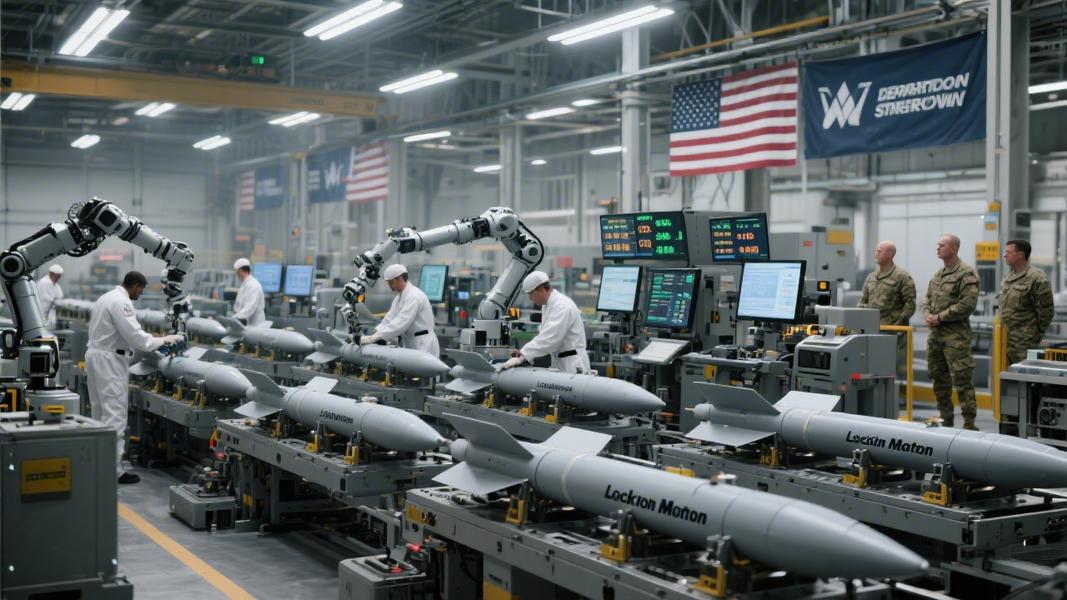
On March 25, 2026, the Department of War and Lockheed Martin announced a sweeping framework agreement to accelerate production of the Precision Strike Missile (PrSM) — a move that comes weeks after the weapon made history as the first of its kind used in actual combat. The deal promises investment in advanced tooling, facility modernization, and testing infrastructure, and could mature into a multi-year contract spanning up to seven years. In other words, Washington isn’t just buying missiles. It’s buying the factory capacity to make a lot more of them, fast.
From Test Range to the Battlefield
The timing is hard to ignore. Just weeks before the framework deal was announced, U.S. Central Command confirmed that PrSM Increment 1 missiles were fired in combat during Operation Epic Fury against Iranian targets — the first time the system has ever been used in a real war. “In a historic first, long-range Precision Strike Missiles were used in combat during Operation Epic Fury, providing an unrivaled deep strike capability,” CENTCOM confirmed in a post on its official account. The strikes reportedly reached targets at least 500 kilometers away. CENTCOM commander Adm. Brad Cooper didn’t mince words afterward. “I just could not be prouder of our men and women in uniform leveraging innovation to create dilemmas for the enemy,” he said.
That combat debut gave the production agreement a certain urgency that a peacetime announcement simply wouldn’t carry. Under Secretary of War for Acquisition and Sustainment Michael Duffey framed it in characteristically blunt terms. “Through this agreement, we are actively building the Arsenal of Freedom with speed and urgency,” Duffey said in the release. “By empowering industry to invest in the factory floor, we are building a decisive and enduring advantage for our warfighters to outpace any potential adversary.”
What PrSM Actually Is — and Why It Matters
PrSM is, at its core, a replacement for the aging MGM-140 ATACMS — the Army’s workhorse long-range surface-to-surface missile that’s been in service since the early 1990s. But calling PrSM a simple replacement undersells it considerably. The system is launchable from both HIMARS and M270 MLRS platforms, covers a strike range of 60 to 500 kilometers, and crucially, fits two missiles per pod — doubling the payload capacity over ATACMS. Per unit cost runs between $1.6 million and $3.5 million depending on production volume, according to analysts.
Low-rate initial production of Increment 1 began in 2024, with roughly 100 missiles delivered by late 2025 when the system reached initial operational capability. The Army’s current plan calls for 3,986 Increment 1 missiles and an additional 1,589 Increment 2 missiles, with production rates climbing to 400 weapons per year by 2028, as outlined in Army acquisition briefings. That’s a significant ramp — and one that the new framework agreement is explicitly designed to support.
The Next Version Is Already Flying
Here’s where it gets more interesting. Even as Increment 1 missiles were being fired over Iran, Lockheed was already testing the next version. PrSM Increment 2 completed a test flight earlier this month, traveling over 200 miles — roughly 350 kilometers — from a HIMARS launcher, and it carries a fundamentally different capability than its predecessor: a multi-mode seeker designed to track and destroy moving targets, including ships at sea. That’s not a minor upgrade. It’s a different mission set entirely, one with obvious implications for any future conflict in the Pacific.
“With Increment 2, PrSM delivers the long-range capability the Army asked for to defeat moving land and maritime threats,” said Carolyn Orzechowski, Lockheed Martin’s vice president of Precision Fires Launchers and Missiles, in a statement noted by multiple outlets. Future increments are expected to push the range beyond 1,000 kilometers — a threshold that became politically possible only after the U.S. withdrew from the INF Treaty, as documented in open-source defense records.
Allies Are Paying Attention
It’s not just Washington. Australia signed a memorandum of understanding with the U.S. in June 2025 to participate in PrSM production and development — a notable step for a country that has spent the past several years quietly but steadily expanding its long-range strike portfolio. The move reflects a broader pattern: allies watching U.S. precision strike capabilities mature in real combat conditions and deciding they want in before the production line fills up.
Still, questions remain about whether the industrial base can actually deliver at the pace being promised. Framework agreements are not contracts. The multi-year deal is still prospective, and the gap between announced production targets and actual delivery schedules has historically been a sore point in Pentagon acquisition. The investments in tooling and facility modernization are meant to close that gap — but factory floors take time to build, and adversaries don’t always wait.
A New Baseline for Long-Range Strike
What’s become clear over the past few weeks is that PrSM is no longer a program-of-record talking point at defense conferences. It’s a weapon that has been fired in anger, that’s being iterated rapidly, and that the U.S. government is now moving to produce at industrial scale. The framework agreement is, in that sense, less an announcement than a reckoning — an acknowledgment that the era of ATACMS is over and that what replaces it needs to exist in large enough numbers to actually matter.
As Duffey put it, the goal is speed and urgency. Whether the defense industrial base can match that ambition — with all its supply chain constraints, workforce shortages, and competing program demands — is a question the next several years will answer. But for the first time in a long time, the Army has a long-range precision strike missile that’s been tested not just in the desert of New Mexico, but over a real target, in a real war. That changes the conversation considerably.
The Arsenal of Freedom, it turns out, has already been fired.
