
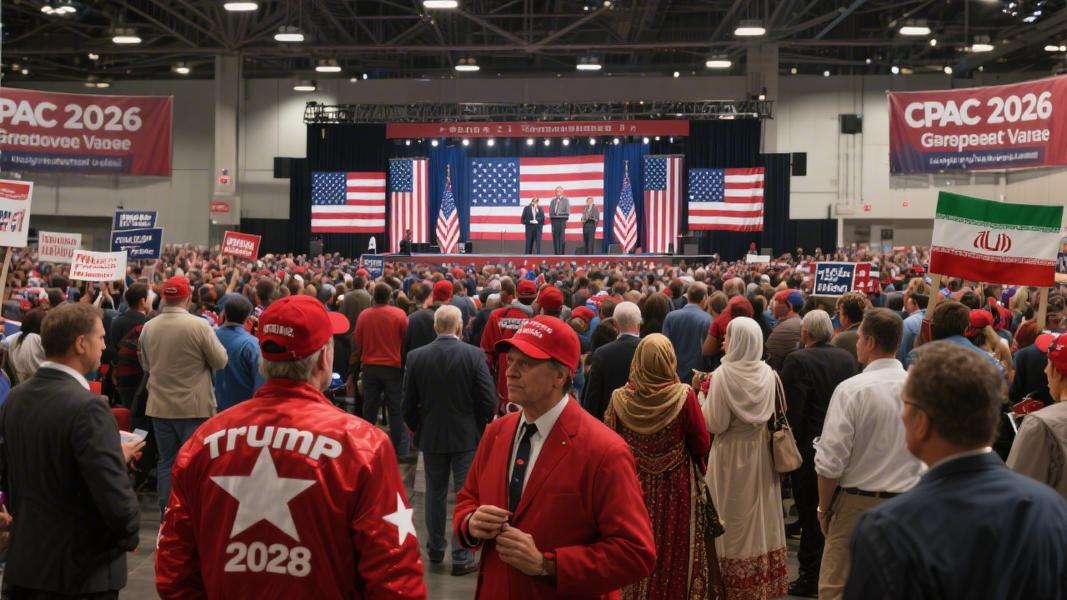
CPAC is heading to Texas — and so is just about every political flashpoint of the moment. The conservative movement’s marquee annual gathering convenes March 25–28 at the Gaylord Texan Resort & Convention Center in Grapevine, and this year’s conference arrives at a genuinely complicated moment for the American right.
The Conservative Political Action Conference has long served as a kind of mood ring for the GOP base — a place where the party’s energy, anxieties, and ambitions get aired out in real time. This year, with U.S. military operations in Iran rattling public opinion, a bruising Texas Senate primary already drawing presidential attention, and a midterm election cycle creeping into view, the conference promises to be anything but a victory lap.
A Speaker Lineup Built for the Moment
The roster of confirmed speakers reads like a cross-section of the modern conservative coalition — media figures, national security veterans, international allies, and elected officials who’ve found their footing in the MAGA era. Todd Starnes, CEO of Starnes Media Group and host of the Todd Starnes Show on Newsmax, is among those scheduled to take the stage. Starnes spent fifteen years at Fox News Channel — from 2005 to 2019 — as a radio news anchor, campaign reporter, and White House correspondent before moving on.
Also confirmed is Sarah Makin, a human rights advocate, filmmaker, and former U.S. government official who served in the first Trump administration as Deputy Assistant to the President and Senior Director on the National Security Council. Her expertise in international religious freedom and national security policy makes her a particularly relevant voice given the current geopolitical climate. Alongside her, Andrew Cooper — Founder and National Director of CPAC Australia since 2019 and President of LibertyWorks, a non-profit dedicated to individual liberty and free enterprise — will offer a perspective from the international conservative movement, a reminder that CPAC’s reach now extends well beyond American shores.
Then there’s Rep. Ronny Jackson (R-TX), who represents Texas’s 13th congressional district and carries a 96% CPAC Conservative rating. Jackson’s presence underscores the conference’s deep Texas roots this cycle. Rounding out the political strategist contingent is Jim McLaughlin, president of McLaughlin & Associates and one of the more respected public opinion readers in Republican circles, who is also set to appear.
Iran Hangs Over Everything
How bad is the political turbulence around the Iran war? Bad enough that it’s expected to dominate hallway conversations even when it’s not explicitly on the agenda. A recent AP-NORC poll found that roughly 59% of Americans believe the military action in Iran has been excessive — a number that would be alarming in any political environment, but especially so heading into midterm territory.
John Gizzi, a CPAC veteran and columnist for Newsmax, didn’t mince words about what’s coming. “This is obviously going to be a hot topic,” he noted, and it’s hard to argue otherwise. The fissures are showing even within the base. Steve Bannon, whose War Room podcast remains a barometer of grassroots MAGA sentiment, has raised the alarm about what a prolonged conflict could do to Republican electoral prospects. “We are going to bleed support,” he warned, framing the risk in the bluntest of terms — if the war becomes, in his words, “a hard slog,” the GOP could find itself on the defensive with the very voters it can least afford to lose.
That said, not everyone on the right is sounding the retreat. Sen. Ted Cruz has been unequivocal in his support of the military action, telling CBS News, “I think President Trump was exactly right to act to protect Americans.” It’s a position that reflects where a significant chunk of the conservative establishment still sits — even as the base shows signs of restlessness.
The numbers offer a mixed picture. The same AP-NORC survey from February 2026 found that 86% of conservatives still approved of President Trump’s job performance — a figure that speaks to the durability of his grip on the base, even amid the Iran debate. But approval ratings and enthusiasm for a specific military campaign aren’t the same thing, and Republican strategists know it.
Texas Rep. Steve Toth — who pulled off a notable upset by defeating incumbent Republican Rep. Dan Crenshaw in Texas’ March 3 primary — offered a measured read on the mood. “From MAGA people, for the most part, I don’t hear frustration with the president,” he said. “I don’t know that we’re doing a great job at communicating the full ramifications.” That’s a polite way of saying the messaging operation has some catching up to do.
The Texas Senate Race Adds Another Layer
The conference is also unfolding against the backdrop of one of the most closely watched Republican primaries in the country. Texas Attorney General Ken Paxton, who is challenging four-term GOP Sen. John Cornyn, has a prominent role at this year’s CPAC — serving as the featured speaker at the Ronald Reagan Dinner on Friday evening. That’s not a coincidence. The Reagan Dinner slot is among the most coveted at the conference, and Paxton’s team will be working the room hard.
President Trump has already weighed in on the Senate contest, and not quietly. He called for the race to be resolved before the May 26 runoff, declaring that the ongoing contest “cannot, for the good of the Party, and our Country, itself, be allowed to go on any longer.” It’s a remarkable statement — a sitting president essentially demanding that a Republican primary end on his timeline. Whether that kind of pressure accelerates or complicates the race remains to be seen.
What CPAC 2026 Really Is
Strip away the speeches and the Reagan Dinner and the panel discussions, and CPAC is ultimately a negotiation — between the party’s leadership and its base, between ideological purity and electoral pragmatism, between the movement’s ambitions and the realities of governing. This year, with Iran dominating the news cycle, a Texas Senate race drawing presidential intervention, and midterms looming on the horizon, that negotiation is going to be noisier than usual.
Grapevine, Texas may be an unlikely setting for the conservative movement to reckon with its next chapter. But then again, nobody said this was going to be tidy.
