
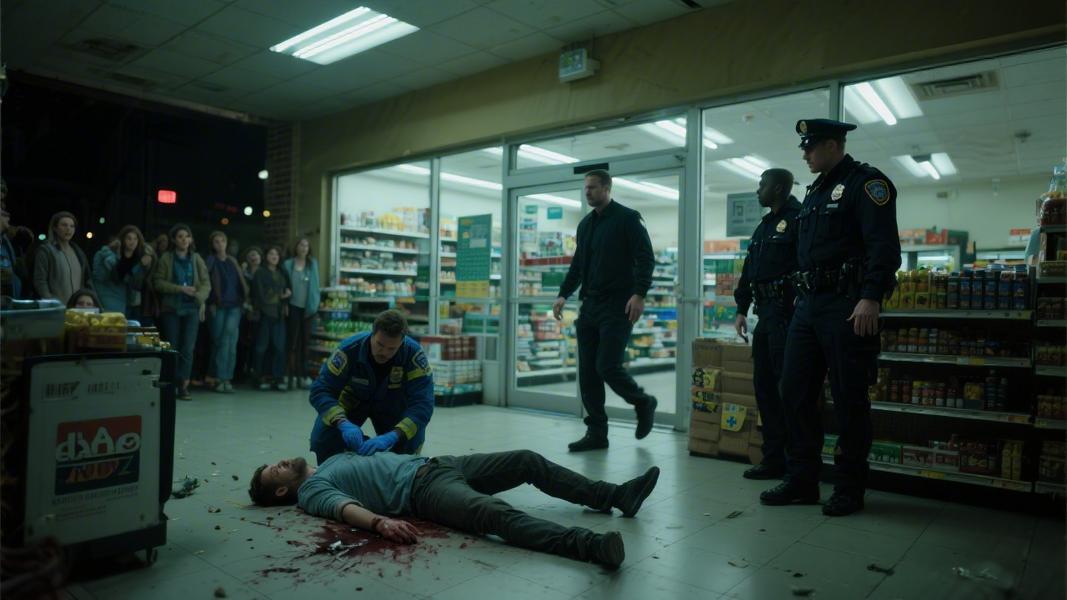
A man wanted in connection with a deadly stabbing inside a Garland grocery store walked into police custody Saturday, ending what authorities had been treating as an active manhunt following one of the more jarring acts of violence the city has seen inside a public space in recent memory.
The suspect — wanted in the stabbing death of a man killed inside the store — turned himself in to Garland police, according to authorities. The victim lost his life inside what should have been one of the most ordinary settings imaginable: a grocery store, the kind of place people visit without a second thought. That’s what makes this case linger.
A Deadly Scene in a Familiar Place
Details surrounding the circumstances of the stabbing — what sparked it, whether the two men knew each other, what exactly unfolded inside those aisles — haven’t been fully released by investigators. What is known is that a man is dead, and the person police believe is responsible ultimately chose to walk through the station doors himself rather than wait to be found.
That decision matters. Suspects who surrender voluntarily can sometimes complicate the narrative authorities are trying to build — or, depending on how it plays out in court, it can factor into how a case is ultimately resolved. It doesn’t change the charge. But it changes the story, at least a little.
What Comes Next
So where does this go from here? Garland police are expected to continue their investigation into the circumstances of the killing, and the suspect will likely face serious charges in connection with the victim’s death. Prosecutors will ultimately decide the path forward, but a homicide inside a public retail space — with, presumably, witnesses and surveillance infrastructure — is rarely a case that lacks for evidence.
It’s worth noting that Garland, a sprawling city in Dallas County with a population pushing 250,000, isn’t immune to violent crime — no city of that size is. But a stabbing death inside a grocery store still cuts through the noise in a way that most incidents don’t. People remember it. They think about it the next time they’re standing in the checkout line.
The victim, whose name has not yet been publicly released pending family notification, deserves more than a footnote. He went to a grocery store. He didn’t come home. That’s the part that doesn’t resolve neatly, regardless of how the legal proceedings unfold — and it’s the part that’ll stay with this community long after the case is closed.
